
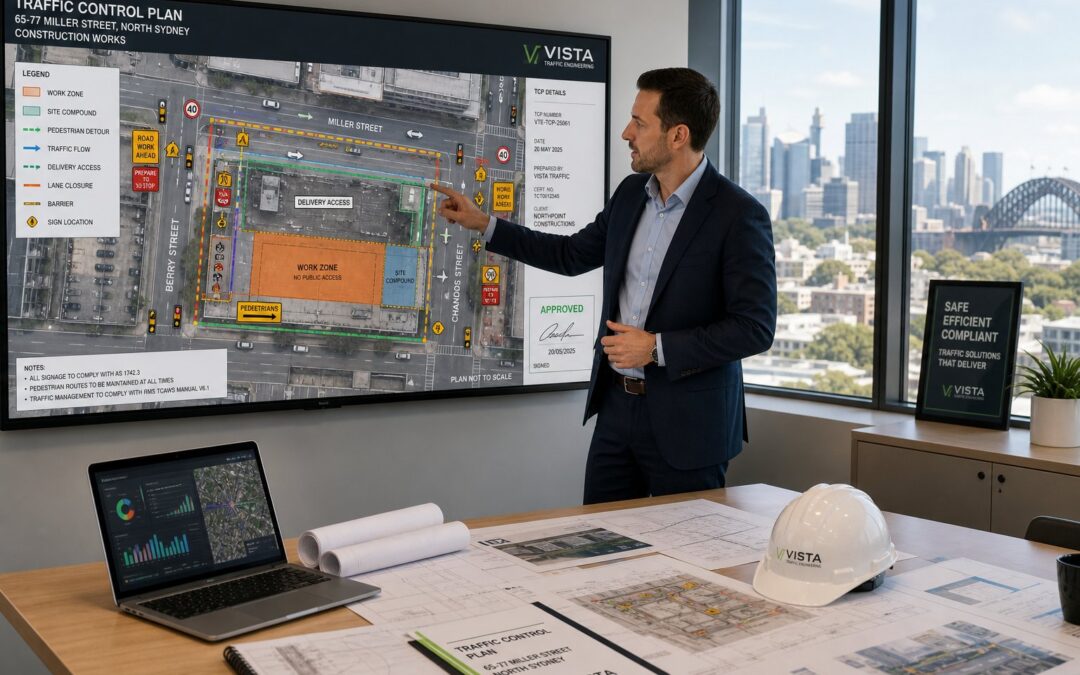
If you’re lodging a development application or organising construction works in Sydney, traffic planning can become a bottleneck surprisingly fast. A project may look straightforward on paper, yet the moment it affects a road, footpath, loading zone, bus stop or pedestrian route, councils and road authorities usually want far more than a simple sketch. They want a compliant Traffic Control Plan, now commonly referred to in NSW as a Traffic Guidance Scheme, that shows exactly how the site will operate safely while work is underway.
That’s where experienced traffic engineers matter. At ML Traffic Engineers, we help private developers, architects, building designers and property owners move from uncertainty to approval-ready documentation with practical, compliant traffic planning support. Our role is not just to draw signs on a plan. We assess risk, understand authority expectations, anticipate likely objections and prepare TCP documentation that works in the real world of Sydney streets.
In this guide, we explain what a TCP is, when you need one, how it is prepared, and why qualified traffic engineering input can save serious time during approvals. We’ll also cover common delay points, what information to have ready before you request a plan, and how to choose the right support for your application. If faster approvals and fewer surprises are the goal, this is where to start.
Key Takeaways
- ML Traffic Engineers provide expert TCP (Traffic Control Plan) services in Sydney, ensuring compliant, practical traffic management documentation that meets council and Transport for NSW requirements.
- A compliant TCP is essential for any Sydney construction or development work affecting public roads, footpaths, or pedestrian routes to maintain safety and minimise traffic disruption.
- Early engagement of qualified traffic engineers during project planning accelerates approvals by integrating traffic management with staging, access, and authority expectations.
- Experienced traffic engineers assess site-specific risks, traffic flows, and local authority conditions to create customised TCPs that avoid common delays and redesigns.
- Proper communication and continuous updates during construction help prevent last-minute compliance issues and approval delays in complex urban environments.
- Choosing a traffic engineering consultant with local Sydney expertise and a comprehensive approach reduces project risk and supports smoother approval pathways.
What A TCP Is And Why It Matters For Sydney Developments
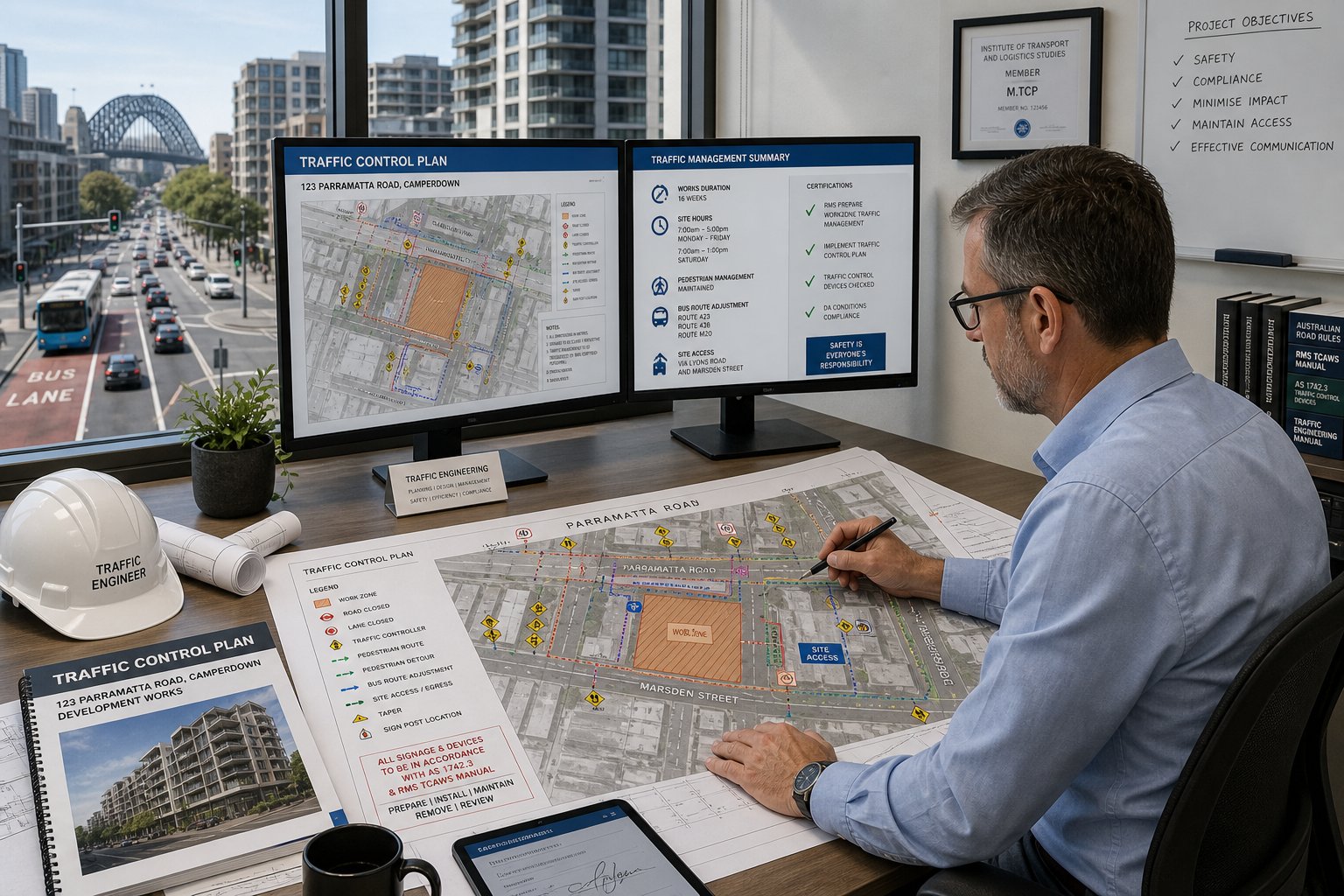
A Traffic Control Plan (TCP), now often described in NSW as a Traffic Guidance Scheme (TGS), is a detailed temporary traffic management document that shows how vehicles, pedestrians, cyclists and public transport will be managed safely around works.
In practical terms, it maps out things like:
- temporary signs and devices
- lane closures or shifts
- pedestrian detours
- work zones and tapers
- site access and delivery movements
- temporary changes to parking, loading or bus operations
For Sydney developments, this matters because even relatively small works can affect a busy and tightly constrained public environment. A blocked footpath in Surry Hills, a lane occupation in Parramatta, or a crane lift near a bus route in the eastern suburbs can trigger approval requirements very quickly.
A compliant TCP is often essential because councils, Transport for NSW and other road authorities need confidence that your works won’t create unreasonable safety risks or traffic disruption. They also want to see that emergency access, public transport operations and pedestrian connectivity have been properly considered.
And this is the key point many applicants miss: a TCP is not just a site formality. It can directly influence whether works are approved, how conditions are drafted, and whether the project timeline stays intact. Poor traffic planning tends to create requests for further information, redesigns and avoidable delays.
Done properly, a TCP helps everyone. Authorities get a safer, clearer proposal. Contractors get workable site guidance. Developers get a smoother path to approvals and site mobilisation.
When You Need A Traffic Control Plan For Construction Or Development Work
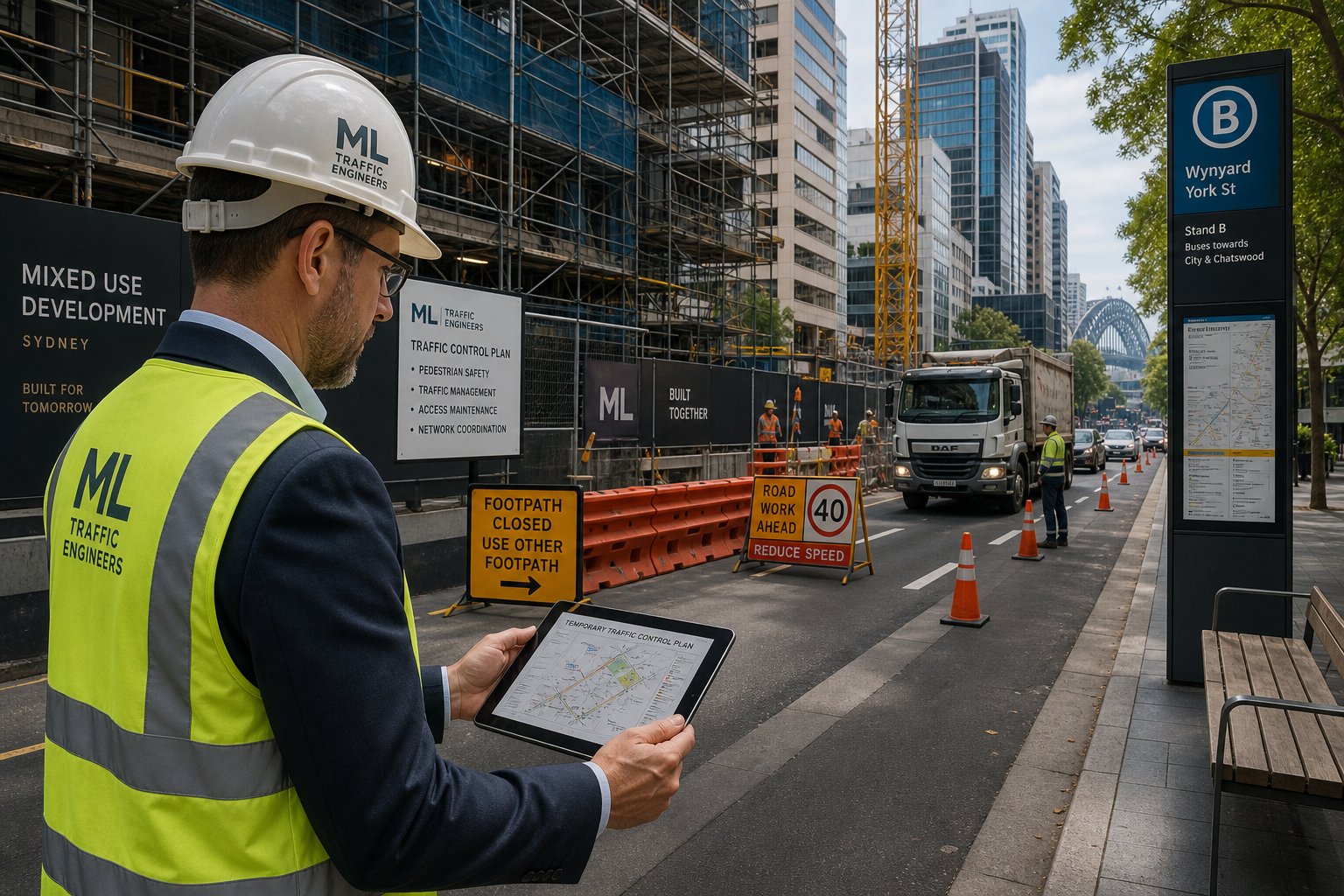
You generally need a Traffic Control Plan in Sydney when proposed works affect the public domain in any meaningful way. That includes roads, footpaths, kerbside space, verges and shared pedestrian areas. If normal movement patterns are changing, even temporarily, there’s a strong chance a TCP will be required.
Typical triggers include:
- occupying part of a road or lane
- closing or diverting a footpath
- changing access to driveways or service entries
- interrupting parking, loading zones or bus stops
- using cranes, concrete pumps or elevated work platforms from the street
- placing hoardings, scaffolding or site sheds near public movement areas
- scheduling heavy vehicle deliveries that affect traffic flow
In many cases, the need for a TCP appears before physical construction begins. A council condition, a road opening permit, or a TfNSW requirement may call for one as part of approval documentation. We often see applicants assume they can “sort traffic later”, only to find the authority wants detailed temporary management arrangements up front.
Sydney’s approval environment is also layered. Local roads may sit with council, while classified roads or certain bus corridors can involve stricter external review. So the question isn’t just whether works are happening. It’s whether those works alter how the public and the road network operate.
If they do, a well-prepared TCP becomes less of an optional extra and more of a project-critical approval document.
Sydney Projects That Commonly Require A TCP
Some project types trigger TCP requirements again and again across Sydney.
These commonly include:
- residential apartment construction
- mixed-use and commercial developments
- shopfront and internal fit-out works with street-based deliveries
- utility upgrades and service connections
- façade remediation and cladding works
- scaffolding and hoarding installations
- footpath and road reconstruction
- subdivision and civil works
- crane lifts and oversized plant movements
- temporary event setups affecting roads or pedestrian areas
A small terrace renovation in an inner-city street may need a TCP if materials are delivered from the roadway. A healthcare project near a hospital precinct may need one because pedestrian continuity and ambulance access are sensitive. A warehouse or industrial upgrade may need one because truck turning paths, staging and queue management become critical.
That variety is exactly why experienced engineering input matters. Similar-looking jobs can have very different approval pathways depending on road classification, traffic volumes, nearby land uses and the way construction staging is proposed.
How Traffic Engineers Prepare A Compliant TCP In Sydney
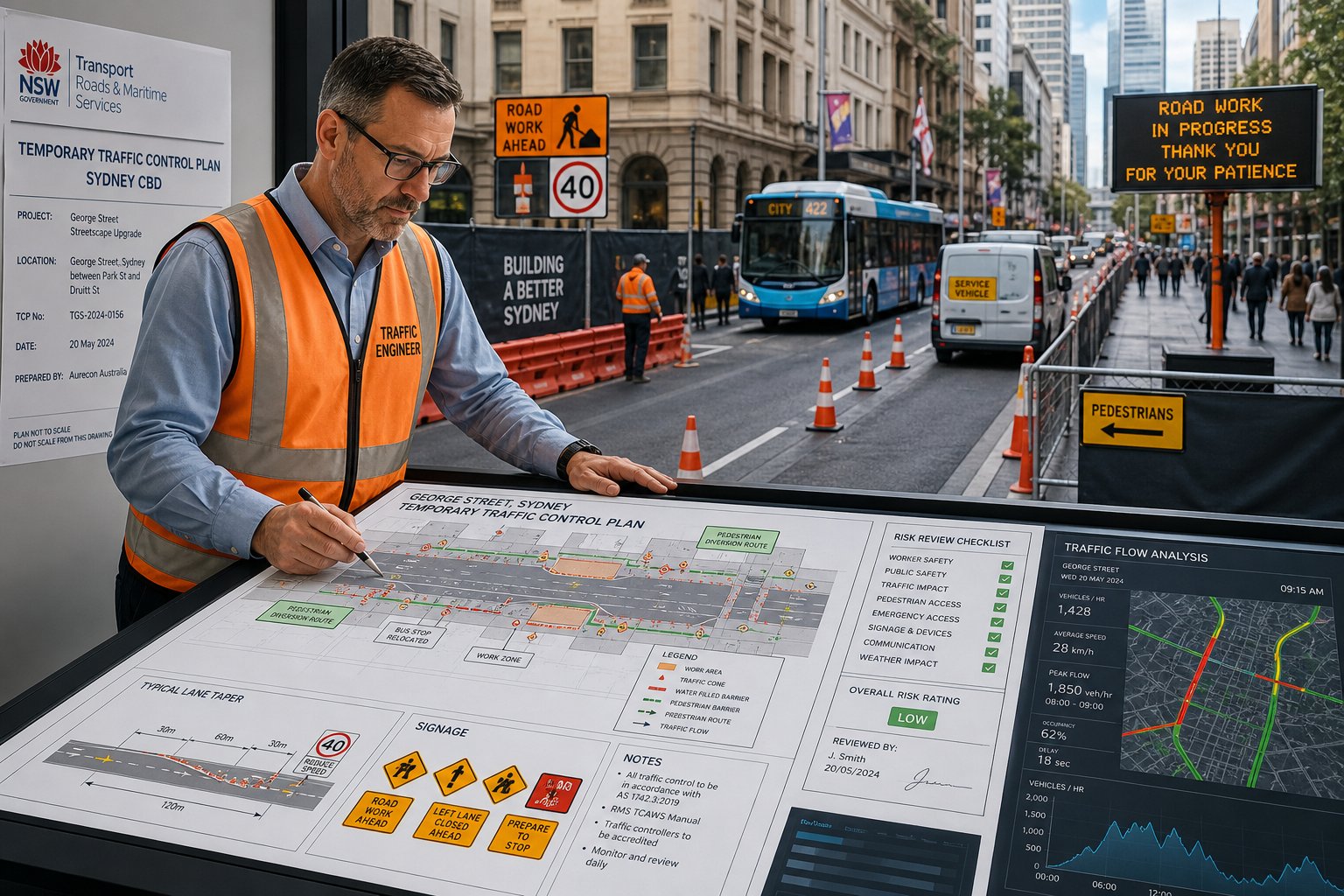
Preparing a compliant TCP in Sydney is part technical exercise, part local approvals strategy. It’s not enough to produce a tidy diagram. The plan needs to respond to real site conditions, the applicable standards, and the expectations of the authority reviewing it.
At ML Traffic Engineers, we approach TCP preparation as a practical design and compliance task. We start with the proposed works and ask the obvious-but-often-overlooked questions: what changes in the street environment, who is affected, what risks are introduced, and what control measures are realistically workable on site?
From there, the plan is built around safe movement and operational clarity. That can include temporary lane arrangements, pedestrian corridors, sign spacing, advance warning, tapers, truck access, sight distance considerations and staging notes. Where needed, we also coordinate broader traffic inputs such as servicing reviews, access checks and supporting planning documents.
The quality of a TCP often comes down to whether it has been engineered for the site rather than copied from a generic template. Sydney authorities see enough standardised plans to spot weak work very quickly. If the surrounding network is complex, the documentation has to be correspondingly sharper.
Site Assessment, Risk Review, And Traffic Flow Analysis
Good TCPs begin with understanding the site as it actually operates, not just as it appears on a drawing.
That usually involves reviewing:
- road geometry and lane configuration
- traffic volumes and peak movement patterns
- nearby intersections and queue behaviour
- pedestrian activity and crossing points
- cyclist movements
- bus stops and public transport interfaces
- schools, hospitals or event-sensitive land uses nearby
- existing parking and loading demands
We also look at construction methodology, vehicle types, access frequency and whether different stages of work create different risks. A single-stage footpath occupation is one thing. A multi-stage project involving deliveries, crane lifts and changing lane conditions is another altogether.
Where required, traffic engineers may use tools such as SIDRA to assess intersection performance or AutoTURN to confirm vehicle swept paths. Those tools aren’t needed on every job, but when access is tight or traffic impacts are contested, they can make the difference between an assumption and a defendable engineering position.
Risk review matters just as much. The central question is simple: how do we maintain safety and functionality while the works take place? That means protecting pedestrians, preserving visibility, reducing driver confusion and keeping access workable for public and emergency services.
Standards, Council Conditions, And Authority Requirements That Shape The Plan
A compliant Sydney TCP must align with more than one rulebook. In most cases, the plan is shaped by a combination of Austroads guidance, Australian Standards, and relevant NSW Transport for NSW manuals and specifications, plus any specific council or authority conditions applying to the site.
That sounds dry. In reality, it’s where many approval problems begin.
A plan may fail because sign placement is wrong, pedestrian width is inadequate, taper lengths are non-compliant, sight lines are compromised, or a bus stop relocation issue has not been addressed. Sometimes the layout is technically close, but it ignores a condition in the development consent or a requirement raised in council correspondence.
This is why local experience counts. Different councils can focus on different issues, and classified or high-order roads often attract closer scrutiny. A site on a calm local street and a site fronting a major arterial won’t be reviewed with the same lens.
Our role is to design the TCP so it satisfies the governing technical framework while also speaking the language of approval authorities. That includes clear notes, workable staging, and responses that anticipate likely review comments rather than waiting for them to arrive.
Why Qualified Traffic Engineers Add Value Beyond Basic Traffic Management
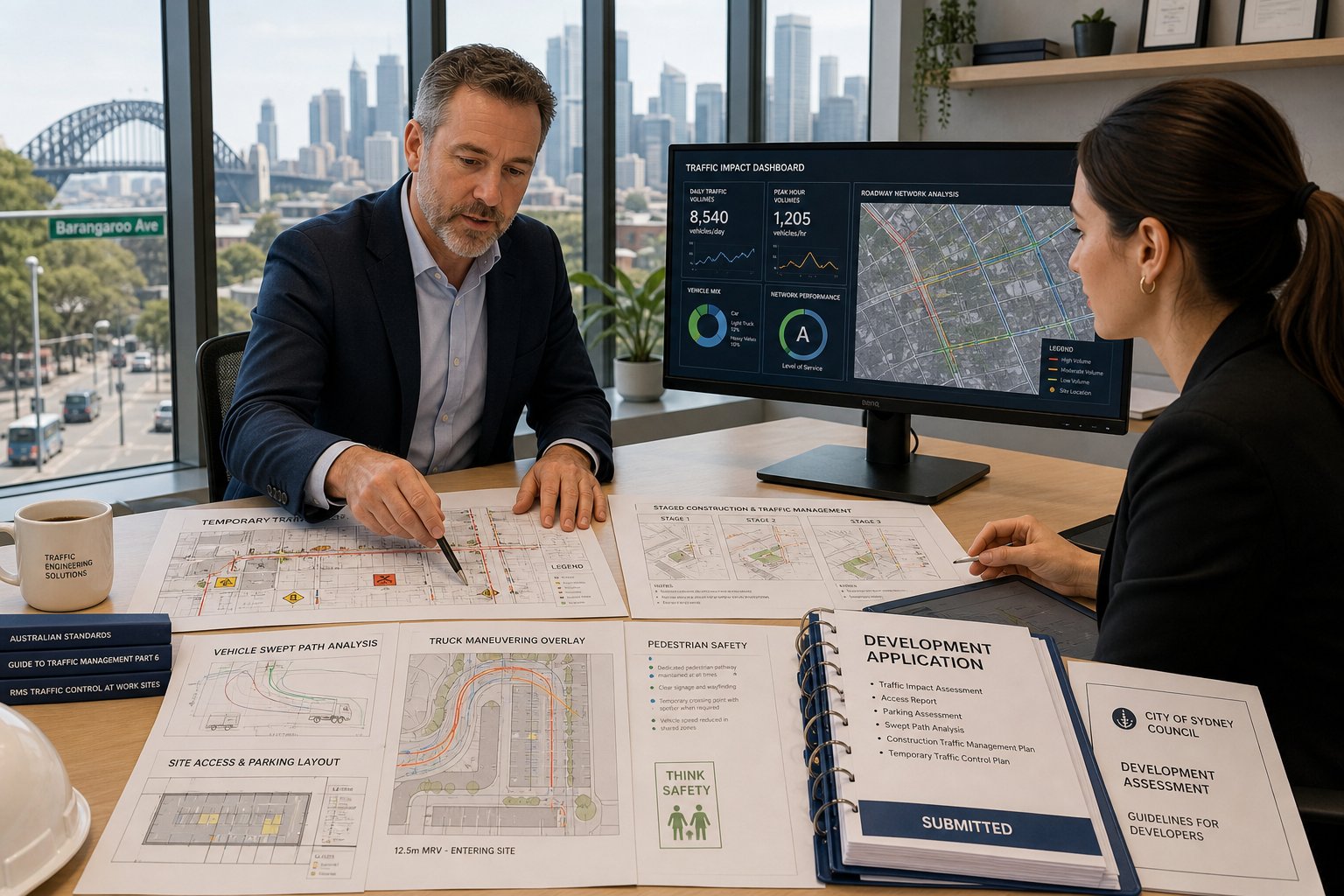
There’s a big difference between a basic temporary traffic layout and a traffic engineering service that supports approvals from start to finish.
Qualified traffic engineers add value because the issue is rarely just where to place cones and signs. For many Sydney projects, the bigger challenge is proving that the development or construction methodology can function safely within its network context, during works and, often, after completion.
That broader value can include:
- traffic impact assessments and traffic statements
- parking, access and servicing reviews
- swept path analysis for waste, delivery or construction vehicles
- responses to council requests for further information
- support for staged construction planning
- integration with development applications and consent conditions
In other words, a strong traffic engineer does not work in isolation from the planning process. We connect the TCP to the rest of the approval pathway.
This matters especially when an authority pushes back. A reviewer may question pedestrian safety, driveway operation, truck manoeuvring, bus impacts or lane occupation assumptions. A basic traffic management provider might redraw the same issue in slightly different form. A qualified traffic engineer can explain the problem, test alternatives and respond with evidence.
At ML Traffic Engineers, that’s where much of the real project value sits. With more than 30 years of combined experience, we help clients not only produce compliant plans but also navigate the conversations around them. For private developers, architects and designers, that can mean fewer approval loops, better coordination with other consultants and a more reliable path from concept to construction.
Common TCP Challenges In Sydney And How To Avoid Approval Delays
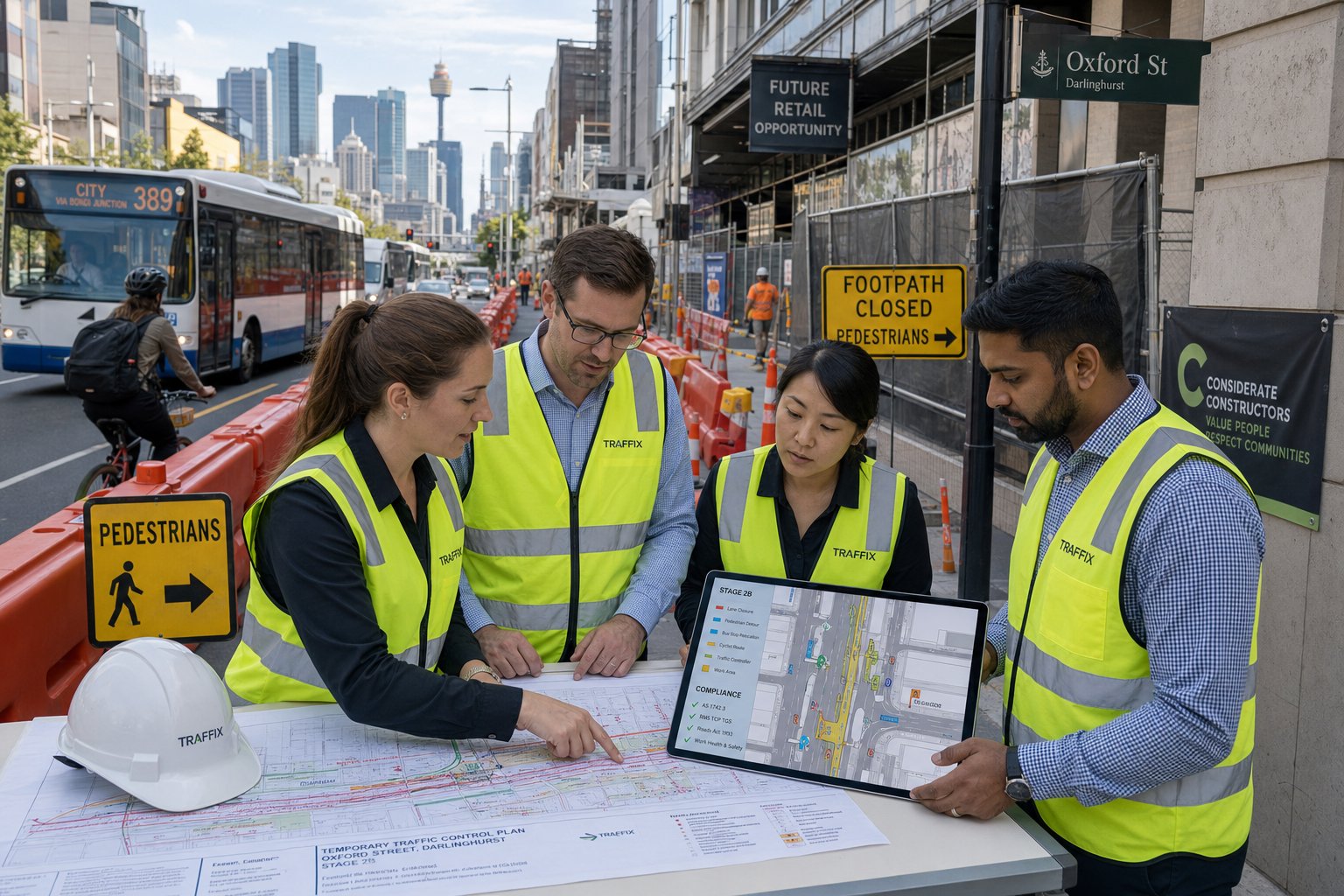
Sydney is not an easy place to prepare temporary traffic documentation. Streets are busy, sites are tight, pedestrians are everywhere, and authority expectations are rarely forgiving. Most approval delays happen for familiar reasons, which is actually good news, because familiar problems can be anticipated.
Common causes of delay include:
- incomplete or outdated base drawings
- TCP layouts that don’t reflect actual construction staging
- inadequate pedestrian management
- poor treatment of bus routes, loading activity or nearby intersections
- missing authority correspondence or overlooked consent conditions
- late design changes that were never fed back into the plan
The fastest approvals usually come from early coordination. If traffic engineers are engaged while staging, access and methodology are still being discussed, the plan can be developed around reality instead of patched together at the end.
Another point worth saying plainly: generic plans are a gamble in Sydney. They may look efficient, but if they don’t respond to the exact frontage, traffic environment and authority requirements, they tend to create more work later.
High-Traffic Roads, Pedestrian Safety, And Constrained Urban Sites
Some sites are difficult from the start. Projects on arterial roads, bus corridors, dense retail strips or CBD-adjacent streets have less room for error and less tolerance for disruption.
On these sites, the hardest issues often involve competing demands:
- keeping traffic moving while occupying road space
- maintaining pedestrian continuity in narrow frontages
- preserving visibility at intersections and driveways
- accommodating cyclists in reduced carriageway widths
- managing works near schools, hospitals or transport hubs
A footpath diversion that seems simple on a drawing may become problematic if it pushes pedestrians too close to vehicles or creates accessibility issues. A lane closure may appear workable until queueing impacts on a nearby signalised intersection are considered. And one relocated sign can matter more than people expect.
Avoiding delay here usually comes down to realism. The plan must reflect the actual operating environment, including peak conditions, heavy pedestrian periods and public transport interfaces. Sometimes the answer is revised staging. Sometimes it’s off-peak scheduling. Sometimes it means accepting that a more conservative traffic treatment is the only approval-ready option.
Design Changes, Staging Updates, And Last-Minute Compliance Issues
One of the most common reasons a TCP becomes a moving target is that the underlying project changes.
Maybe the crane location shifts. Maybe the builder wants a different access point. Maybe the hoarding line moves half a metre. On paper, those can look minor. In traffic terms, they may trigger a full review of pedestrian routes, vehicle paths, sign placement, taper lengths or authority permissions.
This is where projects lose time. Teams treat traffic documentation as static, while construction planning keeps evolving. Then, right before submission or mobilisation, somebody realises the approved TCP no longer matches the works.
The fix is not glamorous, but it works:
- keep traffic engineers involved as staging develops
- issue updated drawings promptly
- flag changes to plant, crane setup and delivery arrangements early
- review authority conditions before each new stage
- allow time for revisions rather than assuming a same-day redraw will solve everything
A good TCP process should be iterative. In Sydney, staged works often need staged thinking. The earlier that’s built into coordination, the less likely the project is to be tripped up by a last-minute compliance problem.
What To Prepare Before Requesting A TCP For Your Project
The quality and speed of a TCP often depend on the quality of the information provided at the start. If the brief is vague, drawings are incomplete, or construction methodology is still mostly verbal, approval-ready documentation becomes harder to produce.
Before requesting a TCP, it helps to prepare the following:
- current site survey and architectural drawings
- frontage plans showing roads, footpaths, kerbs and access points
- construction methodology and work sequence
- proposed staging, including any changes across project phases
- work days and hours
- details of cranes, pumps, elevated work platforms or other major plant
- delivery vehicle types and frequency
- any council, certifier or TfNSW correspondence
- known local constraints such as bus routes, schools, hospitals or event activity
Photos and a simple written summary can help too, especially where access is awkward or the works are unusual.
What clients often underestimate is how useful early clarity can be. If we know, for example, that one stage needs footpath occupancy while another requires a concrete pump on the roadway, we can structure the traffic planning around those shifts from the start.
It also helps to identify who needs the TCP and when. Is it for a DA submission, a construction certificate condition, a road occupancy permit, a hoarding permit, or direct authority approval before works begin? The answer affects the level of detail, timing and coordination required.
A prepared client usually gets a better result faster, not because the engineering is simpler, but because the project constraints are visible early enough to solve properly.
Choosing The Right Traffic Engineering Support For Your Sydney Application
Not all traffic support is equal, and in Sydney that difference shows up quickly during review.
When choosing a consultant, we’d look for more than a provider who can simply produce a plan. The better question is whether they understand how temporary traffic documentation interacts with planning approvals, construction staging and authority expectations.
Useful selection criteria include:
- proven Sydney and NSW experience
- familiarity with council and TfNSW review processes
- ability to prepare both TCP/TGS documentation and broader traffic reports
- responsive turnaround when designs or staging change
- practical understanding of pedestrian management, access and servicing
- clear communication with architects, builders and private developers
This broader capability matters because approval pathways are rarely linear. One job may need only a straightforward TCP. Another may start there and then require a traffic statement, swept path checks, or a formal response to authority comments.
At ML Traffic Engineers, we built our service around that reality. We support private clients from the initial quote through to project completion, with qualified traffic engineers, end-to-end coordination and a strong focus on compliant outcomes. That means we’re not just sending out drawings: we’re helping clients manage a process that can otherwise become fragmented and slow.
The right support should make your application clearer, calmer and more defensible. If a consultant can do that consistently, they’re not just producing documentation, they’re reducing project risk.
Conclusion
A well-prepared Traffic Control Plan can be the difference between a Sydney project that moves cleanly through approvals and one that stalls in requests, revisions and missed timing. The stakes are higher than many applicants expect because TCPs sit at the intersection of safety, public access, authority compliance and construction practicality.
For developers, architects and designers, the smartest move is usually early engagement. When traffic engineers are brought in before staging and access decisions harden, the documentation becomes stronger and the approval path tends to shorten.
That’s exactly where ML Traffic Engineers for TCP in Sydney can add value: combining qualified engineering input, local approval awareness and practical project support from first enquiry to final delivery. In a city with tight sites, busy roads and strict review standards, smarter traffic control planning isn’t a nice extra. It’s part of getting the job approved, built and moving on time.
Frequently Asked Questions about ML Traffic Engineers for TCP in Sydney
What is a Traffic Control Plan (TCP) and why is it important for Sydney developments?
A TCP, also called a Traffic Guidance Scheme in NSW, is a detailed plan managing temporary traffic and pedestrian movements around construction sites to ensure safety and traffic flow. In Sydney, it’s crucial for council and road authority approvals to prevent delays and ensure safe public access during works.
When do I need to prepare a TCP for my construction or development project in Sydney?
You need a TCP in Sydney whenever your project affects public roads, footpaths, kerbs, or changes normal traffic or pedestrian movements. Common triggers include lane closures, footpath diversions, loading zone disruptions, road-based crane operations, or deliveries impacting traffic flow.
How do qualified traffic engineers like ML Traffic Engineers prepare a compliant TCP in Sydney?
They assess the site, conduct risk and traffic flow analyses, use tools such as SIDRA and AutoTURN when needed, and design traffic layouts following Austroads, Australian Standards, and NSW Transport manuals. They also ensure TCPs meet specific council and road authority conditions for safe, approval-ready plans.
What are common challenges with TCP approvals in Sydney and how can delays be avoided?
Common issues include inadequate pedestrian management, non-compliant sign placement, missing authority conditions, and late design changes. Early engagement of traffic engineers, accurate site information, and proactive plan revisions help avoid these delays and streamline approvals.
What additional services do ML Traffic Engineers offer beyond basic traffic management for TCPs?
Beyond TCP drafting, they provide traffic impact assessments, parking and servicing reviews, swept path analyses, responses to council requests, and integration with staging and development applications to support smooth approval processes and reduce project risks.
What should I prepare before requesting a TCP from traffic engineers in Sydney?
Prepare current site and architectural drawings, frontage and road details, construction methodology and staging plans, work schedules, plant and crane info, council or TfNSW correspondence, and highlight any local constraints like nearby schools or bus routes for accurate, timely TCP preparation.
Which areas do we service?
We prepare Traffic Guidance Schemes or Traffic Control Plans in every suburb of Sydney such as Abbotsbury, Abbotsford, Acacia Gardens, Agnes Banks, Airds, Alexandria, Alfords Point, Allambie Heights, Allawah, Ambarvale, Angus, Annandale, Annangrove, Arcadia, Arncliffe, Arndell Park, Artarmon, Ashbury, Ashcroft, Ashfield, Asquith, Auburn, Austral, Avalon Beach, Badgerys Creek, Balgowlah, Balgowlah Heights, Balmain, Balmain East, Bangor, Banksia, Banksmeadow, Bankstown, Bankstown Aerodrome, Barangaroo, Barden Ridge, Bardia, Bardwell Park, Bardwell Valley, Bass Hill, Baulkham Hills, Bayview, Beacon Hill, Beaconsfield, Beaumont Hills, Beecroft, Belfield, Bella Vista, Bellevue Hill, Belmore, Belrose, Berala, Berkshire Park, Berowra, Berowra Heights, Berowra Waters, Berrilee, Beverley Park, Beverly Hills, Bexley, Bexley North, Bidwill, Bilgola Beach, Bilgola Plateau, Birchgrove, Birrong, Blackett, Blacktown, Blair Athol, Blairmount, Blakehurst, Bligh Park, Bondi, Bondi Beach, Bondi Junction, Bonnet Bay, Bonnyrigg, Bonnyrigg Heights, Bossley Park, Botany, Bow Bowing, Box Hill, Bradbury, Bradfield, Breakfast Point, Brighton-Le-Sands, Bringelly, Bronte, Brooklyn, Brookvale, Bundeena, Bungarribee, Burraneer, Burwood, Burwood Heights, Busby, Cabarita, Cabramatta, Cabramatta West, Caddens, Cambridge Gardens, Cambridge Park, Camellia, Cammeray, Campbelltown, Camperdown, Campsie, Canada Bay, Canley Heights, Canley Vale, Canoelands, Canterbury, Caringbah, Caringbah South, Carlingford, Carlton, Carnes Hill, Carramar, Carss Park, Cartwright, Castle Cove, Castle Hill, Castlecrag, Castlereagh, Casula, Catherine Field, Cattai, Cecil Hills, Cecil Park, Centennial Park, Chatswood, Chatswood West, Cheltenham, Cherrybrook, Chester Hill, Chifley, Chippendale, Chipping Norton, Chiswick, Chullora, Church Point, Claremont Meadows, Clarendon, Clareville, Claymore, Clemton Park, Clontarf, Clovelly, Clyde, Coasters Retreat, Cobbitty, Colebee, Collaroy, Collaroy Plateau, Colyton, Como, Concord, Concord West, Condell Park, Connells Point, Constitution Hill, Coogee, Cottage Point, Cowan, Cranebrook, Cremorne, Cremorne Point, Cromer, Cronulla, Crows Nest, Croydon, Croydon Park, Curl Curl, Currans Hill, Currawong Beach, Daceyville, Dangar Island, Darling Point, Darlinghurst, Darlington, Davidson, Dawes Point, Dean Park, Dee Why, Denham Court, Denistone, Denistone East, Denistone West, Dharruk, Dolans Bay, Dolls Point, Doonside, Double Bay, Dover Heights, Drummoyne, Duffys Forest, Dulwich Hill, Dundas, Dundas Valley, Dural, Eagle Vale, Earlwood, East Hills, East Killara, East Lindfield, East Ryde, Eastern Creek, Eastgardens, Eastlakes, Eastwood, Edensor Park, Edgecliff, Edmondson Park, Elanora Heights, Elderslie, Elizabeth Bay, Elizabeth Hills, Elvina Bay, Emerton, Enfield, Engadine, Englorie Park, Enmore, Epping, Ermington, Erskine Park, Erskineville, Eschol Park, Eveleigh, Fairfield, Fairfield East, Fairfield Heights, Fairfield West, Fairlight, Fiddletown, Five Dock, Forest Glen, Forest Lodge, Forestville, Frenchs Forest, Freshwater, Gables, Galston, Georges Hall, Gilead, Girraween, Gladesville, Glebe, Gledswood Hills, Glen Alpine, Glendenning, Glenfield, Glenhaven, Glenmore Park, Glenorie, Glenwood, Gordon, Grantham Farm, Granville, Grays Point, Great Mackerel Beach, Green Valley, Greenacre, Greendale, Greenfield Park, Greenhills Beach, Greenwich, Gregory Hills, Greystanes, Guildford, Guildford West, Gymea, Gymea Bay, Haberfield, Hammondville, Harrington Park, Harris Park, Hassall Grove, Haymarket, Heathcote, Hebersham, Heckenberg, Henley, Hillsdale, Hinchinbrook, Hobartville, Holroyd, Holsworthy, Homebush, Homebush West, Horningsea Park, Hornsby, Hornsby Heights, Horsley Park, Hoxton Park, Hunters Hill, Huntingwood, Huntleys Cove, Huntleys Point, Hurlstone Park, Hurstville, Hurstville Grove, Illawong, Ingleburn, Ingleside, Jamisontown, Jannali, Jordan Springs, Kangaroo Point, Kareela, Kearns, Kellyville, Kellyville Ridge, Kemps Creek, Kensington, Kenthurst, Kentlyn, Killara, Killarney Heights, Kings Langley, Kings Park, Kingsford, Kingsgrove, Kingswood, Kirkham, Kirrawee, Kirribilli, Kogarah, Kogarah Bay, Ku-ring-gai Chase, Kurnell, Kurraba Point, Kyeemagh, Kyle Bay, La Perouse, Lakemba, Lalor Park, Lane Cove, Lane Cove North, Lane Cove West, Lansdowne, Lansvale, Laughtondale, Lavender Bay, Leets Vale, Leichhardt, Len Waters Estate, Leppington, Lethbridge Park, Leumeah, Lewisham, Liberty Grove, Lidcombe, Lilli Pilli, Lilyfield, Lindfield, Linley Point, Little Bay, Liverpool, Llandilo, Loftus, Londonderry, Long Point, Longueville, Lovett Bay, Lower Portland, Lucas Heights, Luddenham, Lugarno, Lurnea, Macquarie Fields, Macquarie Links, Macquarie Park, Maianbar, Malabar, Manly, Manly Vale, Maraylya, Marayong, Maroota, Maroubra, Marrickville, Marsden Park, Marsfield, Mascot, Matraville, Mays Hill, McCarrs Creek, McGraths Hill, McMahons Point, Meadowbank, Melonba, Melrose Park, Menai, Menangle Park, Merrylands, Merrylands West, Middle Cove, Middle Dural, Middleton Grange, Miller, Millers Point, Milperra, Milsons Passage, Milsons Point, Minchinbury, Minto, Minto Heights, Miranda, Mona Vale, Monterey, Moore Park, Moorebank, Morning Bay, Mortdale, Mortlake, Mosman, Mount Annan, Mount Colah, Mount Druitt, Mount Kuring-Gai, Mount Lewis, Mount Pritchard, Mount Vernon, Mulgoa, Mulgrave, Narellan, Narellan Vale, Naremburn, Narrabeen, Narraweena, Narwee, Nelson, Neutral Bay, Newington, Newport, Newtown, Nirimba Fields, Normanhurst, North Balgowlah, North Bondi, North Curl Curl, North Epping, North Kellyville, North Manly, North Narrabeen, North Parramatta, North Rocks, North Ryde, North St Marys, North Strathfield, North Sydney, North Turramurra, North Wahroonga, North Willoughby, Northbridge, Northmead, Northwood, Norwest, Oakhurst, Oakville, Oatlands, Oatley, Old Guildford, Old Toongabbie, Oran Park, Orchard Hills, Oxford Falls, Oxley Park, Oyster Bay, Paddington, Padstow, Padstow Heights, Pagewood, Palm Beach, Panania, Parklea, Parramatta, Peakhurst, Peakhurst Heights, Pemulwuy, Pendle Hill, Pennant Hills, Penrith, Penshurst, Petersham, Phillip Bay, Picnic Point, Pitt Town, Pleasure Point, Plumpton, Point Piper, Port Botany, Port Hacking, Potts Hill, Potts Point, Prairiewood, Prestons, Prospect, Punchbowl, Putney, Pymble, Pyrmont, Quakers Hill, Queens Park, Queenscliff, Raby, Ramsgate, Ramsgate Beach, Randwick, Redfern, Regents Park, Regentville, Revesby, Revesby Heights, Rhodes, Richards, Richmond, Riverstone, Riverview, Riverwood, Rockdale, Rodd Point, Rookwood, Rooty Hill, Ropes Crossing, Rose Bay, Rosebery, Rosehill, Roselands, Rosemeadow, Roseville, Roseville Chase, Rossmore, Rouse Hill, Rozelle, Ruse, Rushcutters Bay, Russell Lea, Rydalmere, Ryde, Sackville North, Sadleir, Sandringham, Sandy Point, Sans Souci, Schofields, Scotland Island, Seaforth, Sefton, Seven Hills, Shalvey, Shanes Park, Silverwater, Singletons Mill, Smeaton Grange, Smithfield, South Coogee, South Granville, South Hurstville, South Maroota, South Penrith, South Turramurra, South Wentworthville, South Windsor, Spring Farm, St Andrews, St Clair, St Helens Park, St Ives, St Ives Chase, St Johns Park, St Leonards, St Marys, St Peters, Stanhope Gardens, Stanmore, Strathfield, Strathfield South, Summer Hill, Surry Hills, Sutherland, Sydenham, Sydney, Sydney Olympic Park, Sylvania, Sylvania Waters, Tallawong, Tamarama, Taren Point, Telopea, Tempe, Tennyson Point, Terrey Hills, The Ponds, The Rocks, Thornleigh, Toongabbie, Tregear, Turramurra, Turrella, Ultimo, Varroville, Vaucluse, Villawood, Vineyard, Voyager Point, Wahroonga, Waitara, Wakeley, Wareemba, Warrawee, Warriewood, Warwick Farm, Waterfall, Waterloo, Watsons Bay, Wattle Grove, Waverley, Waverton, Wedderburn, Wentworth Point, Wentworthville, Werrington, Werrington County, Werrington Downs, West Hoxton, West Pennant Hills, West Pymble, West Ryde, Westleigh, Westmead, Wetherill Park, Whalan, Whale Beach, Wheeler Heights, Wiley Park, Willmot, Willoughby, Willoughby East, Windsor, Windsor Downs, Winston Hills, Wisemans Ferry, Wolli Creek, Wollstonecraft, Woodbine, Woodcroft, Woodpark, Woollahra, Woolloomooloo, Woolooware, Woolwich, Woronora, Woronora Heights, Yagoona, Yarrawarrah, Yennora, Yowie Bay, Zetland.
