
Our expertise extends to hotels and motels, industrial units and subdivisions, licensed premises including gaming halls and taverns, medical centres, and mixed-use sites that blend residential and commercial spaces. We also cater to mosques, night clubs, offices, places of worship, recreational facilities, residential subdivisions, master plans for schools, shops, shopping centre developments, supermarkets, temples, transport terminals, tuition centres, townhouses, and warehouses. Dive into our ARTICLES and VIDEOS for insights and updates.
Our dedicated team is passionate about crafting tailored solutions that meet the unique needs of each project. We understand the complexities of urban planning and are committed to ensuring that every development is compliant while enhancing the community’s infrastructure. With our extensive expertise, we navigate the intricacies of traffic management and site servicing, ensuring your project integrates seamlessly into its environment. Trust ML Traffic Engineers to deliver innovative strategies that prioritise safety, efficiency, and sustainability.
Our services cover:

Traffic Impact Statement (TIS)
Shorter version of an impact assessment for small developments with low traffic generation.

Traffic Guidance Scheme (TGS)
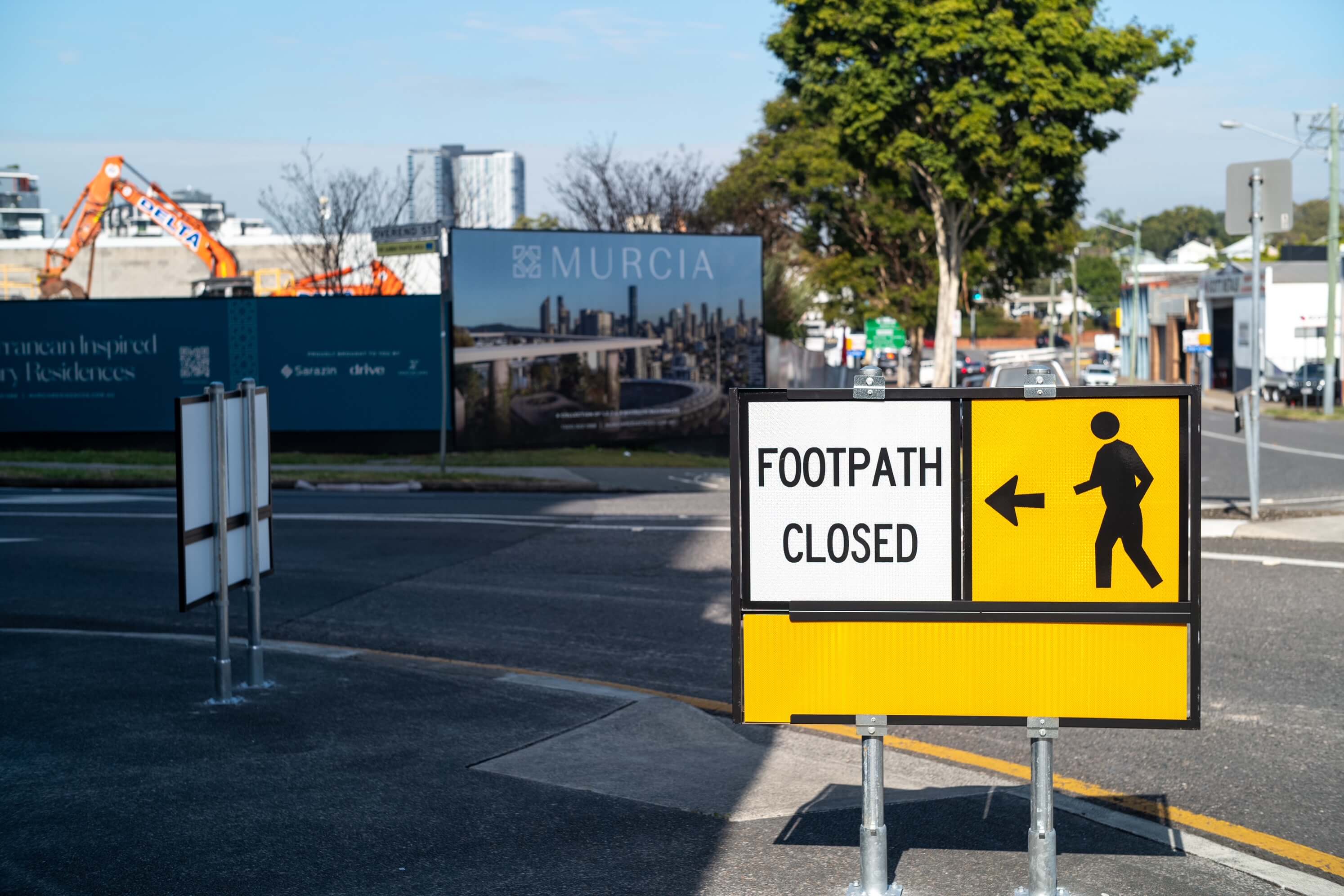
In NSW / Sydney only. A TGS is a safety document that is required for any project that affects a public road or footpath. A TGS shows the location of traffic control measures, such as signs, cones, barriers, and personnel. It also includes information on lane designations, emergency vehicle and public transport allowances, and traffic controller instructions. A TGS is previously known as a Traffic Control Plan (TCP).

Traffic Management Plan (TMP)
In NSW / Sydney only. A TMP outlines how one will manage traffic risks. Traffic hazards are identified, and risks eliminated if possible. If not, bollards, barriers, safety rails or exclusion zones are used to separate people and workers from moving plant and vehicles. A TMP is required for works that involves occupancy of a road (trafficable carriageway, footpath) or land.

Intersection Operations Assessment
Involves peak hour background traffic counts, peak hour traffic projections through the intersection, gap analyses of existing traffic flow where required, and movement by movement average delay, 95th percentile queue and degree of saturation computations using SIDRA software.

Pedestrian Sight-Line Assessment
For resolution of front and side boundary fence related visual constraints. The requirement is for each corner where the driveway meets the verge, sight-triangle measuring 2.5m deep (into the property) and 2.0m wide (across the front boundary) is required.

Vehicle Access Assessment
For site with dual frontages (corner lot) and for site with direct access on an arterial road (a road with a significant traffic carrying function) where a left-turn deceleration lane and/or a right-turn entry median turning bay may be required.

Driveway Ramp Grade Assessment
For compliance, as well as feasibility check for sites with limited block depth. There are regulations regarding maximum permissible grades, grade change transition that ensures no scraping of a vehicle’s underside and mandatory shallow grade for a vehicle leaving a property in order to minimise drop in driver’s eye-height of pedestrians within the road reserve.

Parking Survey
Survey of street and public car park supply (maximum capacity) and occupancies, in conjunction with a car parking demand assessment.

Traffic Survey
Survey of intersection or mid-block directional peak period traffic counts, in conjunction with a traffic impact assessment.

Green Travel Plans
Sets frameworks in place to achieve targeted shifts to non-car-based modes of transport over time.

Car Park Design
Where the applicant’s architect or drafter requires technical input. Our extensive experience with reviewing and optimising car park layouts associated with planning submissions allows us to hone in on configurations that work at the outset. Design considers aspects such as lift and stairwell cores and column grid.

Car Park Certification
Review, verify the as-built car park, line-marking and/or signage and/or provide design input as necessary as per Council’s requirements during planning / development application (DA) stage and/or occupancy certification (OC) stage.

Site Visit
If and when the project requires one. A visit of the site’s surrounding area can be more effective than desktop research involving aerial and street view images.

Feasibility Assessment
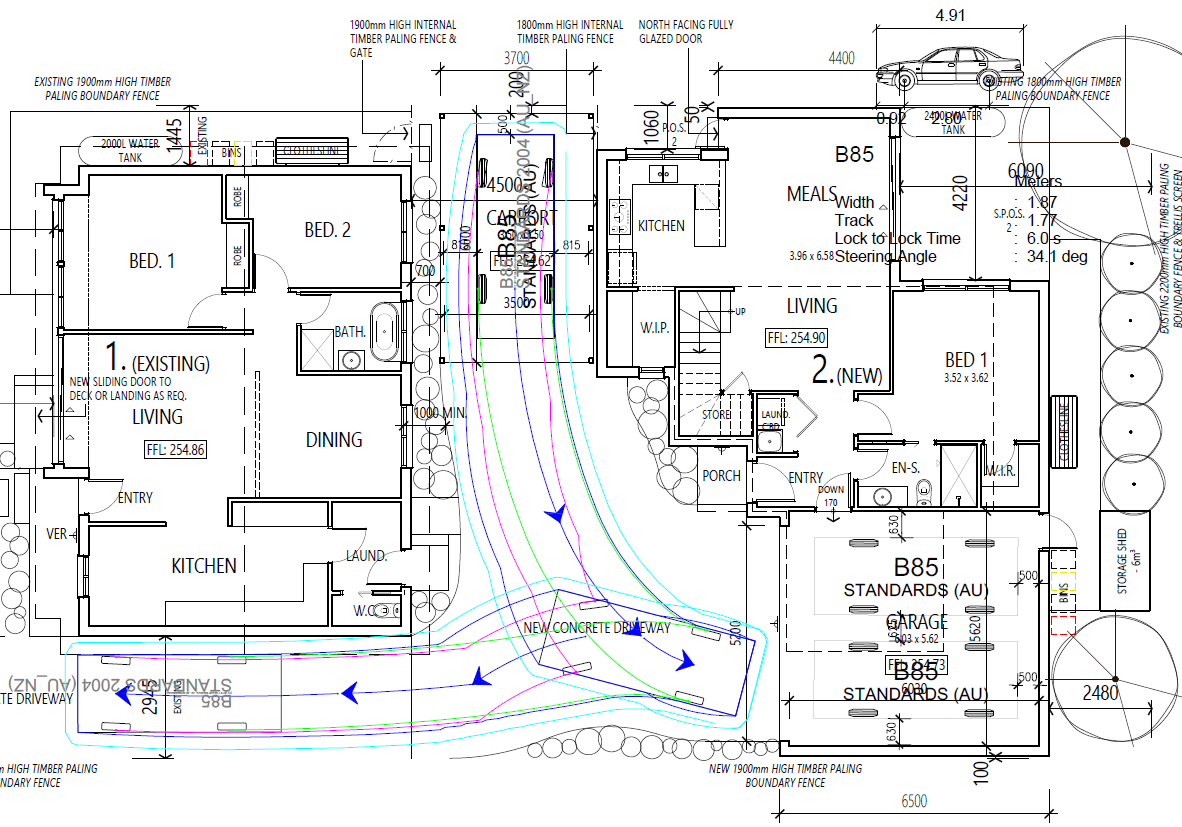
On traffic engineering related matters such as site access, car park layout, vehicle swept path, length of sloped driveway and how many spaces can a specific space fit.


