
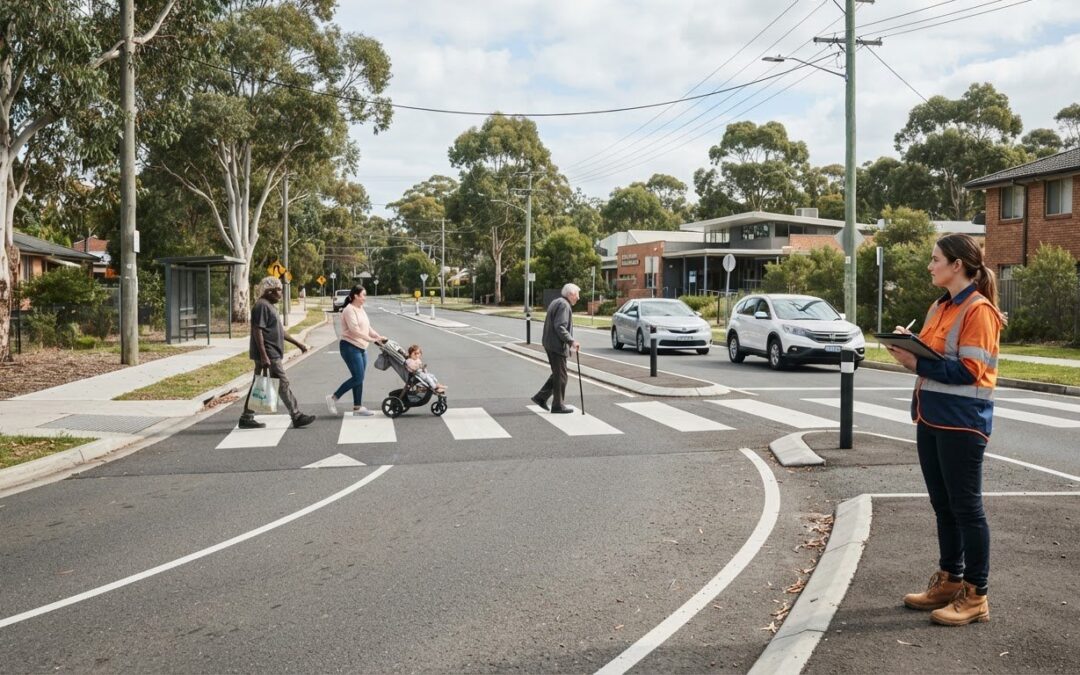
Could a busy footpath still fail to justify a zebra crossing, or could a lower pedestrian count support one? A pedestrian crossing (zebra) warrant analysis isn’t a headcount shortcut. Pedestrian and vehicle volumes matter, but so do traffic speeds, sight distance, who needs to cross and how the site connects to nearby destinations. The applicable road authority’s guidance also shapes the assessment.
It’s reasonable to look for a clear threshold, especially when a recommendation affects project planning or design. But warrants are assessed in context. Meeting a numerical benchmark doesn’t automatically make a zebra crossing suitable, and counts alone may not tell the whole story about a site’s need.
This guide explains the purpose and limits of a warrant analysis, the evidence that can inform a site-specific assessment, and how to develop a defensible recommendation. It also outlines why alternatives may need consideration where conditions don’t support a zebra crossing. ML Traffic Engineers Australia provides traffic engineering and transport planning services, including Traffic Impact Assessments, intersection analysis and sight distance assessment, to help organise site evidence and support development and transport planning decisions.
Key Takeaways
- A pedestrian crossing (zebra) warrant analysis assesses whether a crossing treatment suits a specific location; it doesn’t approve or build the crossing.
- Bring pedestrian and vehicle counts together with site geometry, visibility and surrounding activity to build a more complete evidence base.
- Compare zebra crossings with signalised crossings and other locally applicable treatments rather than assuming one demand measure determines the outcome.
- Record how and when observations were collected, then use them to support a clear, qualified recommendation.
- Traffic engineering analysis can connect crossing evidence with wider intersection, access and development decisions.
What does a pedestrian crossing (zebra) warrant analysis determine?
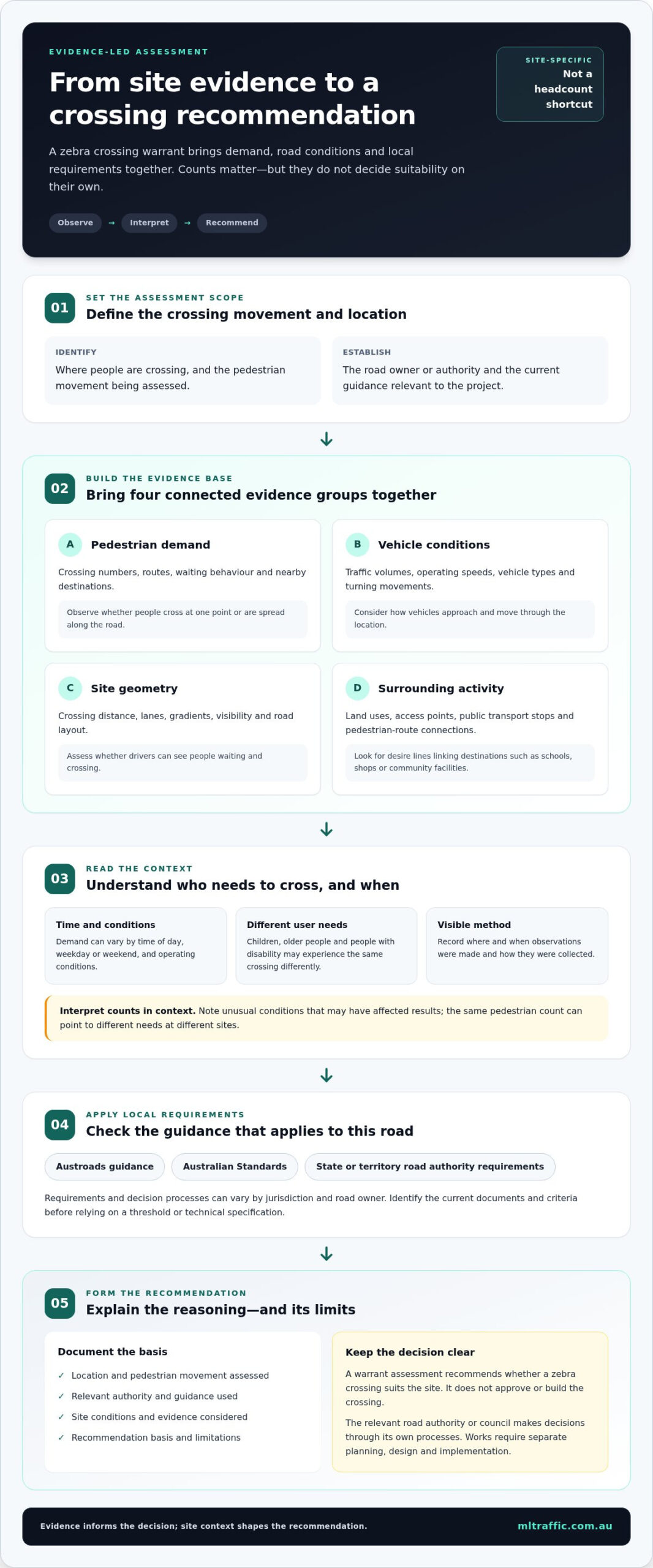
A pedestrian crossing (zebra) warrant analysis considers whether a zebra crossing is a suitable response to pedestrian movement and road conditions at a particular location. It brings together observed demand, vehicle movements, site layout and the function of nearby land uses. The aim is to assess need and suitability, not simply to test whether a pedestrian count reaches a universal trigger.
A warrant assessment is an evidence-based recommendation about crossing suitability; it is not approval to install a crossing. The relevant road authority or council makes decisions through its own processes. Any resulting works also require separate planning, design and implementation.
What is meant by a zebra crossing warrant?
A warrant is an assessment framework, not one national pedestrian-count threshold. It tests whether a crossing treatment responds to the site’s needs and conditions. Austroads guidance, Australian Standards and state or territory road authority requirements may all inform the assessment. Applicable documents and decision processes can vary, so identify the road owner and the current requirements for the project.
For a general overview of the terminology and different uses of zebra crossings, see the reference page. For an Australian project, ground the assessment in the relevant local guidance and actual site evidence.
Pedestrian demand is one part of that evidence. The same number of people crossing may present different needs beside a school, a local shopping area or a low-density road. The assessment also considers whether drivers can see people waiting and crossing, how vehicles approach and move through the location, and whether the road layout supports the proposed treatment. These factors help distinguish a crossing that addresses a genuine movement need from one that may not function safely or effectively at that site.
Who uses the findings and why?
Road authorities and councils may use an assessment when considering a crossing request or planning a change to the road network. Planners and development teams can use the findings to understand pedestrian access and how a proposal may affect movement around a site. The analysis gives decision-makers a documented basis for comparing options; it doesn’t guarantee that a particular treatment will be selected or approved.
For example, a development may create a new pedestrian route between an entrance and nearby destinations. A project team can use site observations and traffic analysis to explain where people are likely to cross and how that movement relates to vehicle access or an intersection. The relevant authority can then consider the evidence alongside its requirements and wider network priorities.
A clear assessment should make its scope and reasoning visible. It can identify:
- the crossing location and the pedestrian movement being assessed;
- the relevant road authority and guidance used;
- the site conditions and evidence considered; and
- the basis for the recommendation, including any limitations.
This distinction matters for project planning. A well-supported recommendation helps clarify the next decision, while approval and delivery remain with the responsible authority.
Which evidence shapes a pedestrian crossing warrant assessment?
A pedestrian crossing (zebra) warrant analysis draws on several types of evidence. Counts show how people and vehicles move, while site observations explain the conditions behind those movements. Record where and when observations were made, how they were collected, and whether unusual conditions may have affected the results.
Evidence is typically organised into four connected groups:
- Pedestrian demand: crossing numbers, routes, waiting behaviour and nearby destinations.
- Vehicle conditions: traffic volumes, operating speeds, vehicle types and turning movements.
- Site geometry: crossing distance, lanes, gradients, visibility and road layout.
- Surrounding activity: land uses, access points, public transport stops and connections to pedestrian routes.
Applicable Austroads guidance, Australian Standards and state or territory road authority requirements may shape what is measured and how findings are interpreted. Requirements can vary by jurisdiction and road owner. Identify the current documents and criteria before relying on a threshold or technical specification.
How pedestrian demand and user needs inform the assessment
Count people crossing at the proposed location and observe their movements, including whether they cross at one point or are spread along the road. Note nearby destinations such as schools, shops, transport stops or community facilities, and look for desire lines that connect them. Record the survey location and method so the count can be understood in context.
Demand can vary by time of day, between weekdays and weekends, or under different operating conditions. Children, older people and people with disability may also experience the same crossing differently. Document relevant access needs and observed behaviour without assuming that one user group has the same requirements as another.
How traffic and site conditions change the picture
Traffic evidence should include verified vehicle volumes, operating speeds and the number and arrangement of lanes. A site inspection adds details that a count cannot show: sight distance, road alignment, parked vehicles, driveways, nearby intersections and whether drivers can see people waiting to cross. Measure or document the crossing distance and note features that affect the approach or waiting area.
Interpret pedestrian demand alongside the road context. The same crossing activity can present a different level of exposure depending on traffic speed, lane configuration, visibility, crossing distance and vehicle access movements.
A defensible evidence record distinguishes observations from assumptions. Note survey dates, time periods, weather or temporary disruptions where relevant, and the method used to classify movements. If the proposed crossing relates to a development or changed access arrangement, explain how those changes may affect pedestrian routes and vehicle movements.
Where the crossing question forms part of a broader development review, a Traffic Impact Assessment can help relate movement evidence to access and network conditions.
Is a zebra crossing always the right response? Compare the assessment options
No. A pedestrian count or other single demand measure doesn’t automatically determine the treatment. A pedestrian crossing (zebra) warrant analysis should compare the movement need with the road environment and consider whether a zebra crossing is operationally suitable. A treatment that appears appropriate based on demand may need further investigation if visibility, traffic conditions, crossing distance or network function raises concerns.
The comparison below is a starting point, not a design specification. Treatment availability, assessment criteria and detailed requirements depend on the road authority and jurisdiction. Use the current applicable guidance when drawing conclusions.
| Treatment | Broad considerations | Questions for assessment |
|---|---|---|
| Zebra crossing | May be considered where a marked crossing suits pedestrian movements and the road environment. | Can drivers see the crossing and people waiting? Are vehicle approach conditions and crossing length appropriate under local guidance? |
| Signalised crossing | May warrant investigation where pedestrian and vehicle movements need signal control, or where the site context points to a controlled crossing option. | How do traffic operations, pedestrian delay, intersection proximity and the wider signal network affect its suitability? |
| Other locally applicable treatments | Options may include pedestrian refuges, kerb extensions or raised crossings, subject to authority requirements and site conditions. | Could the treatment support staged crossing movements, improve the crossing layout or respond to the road’s operating context? |
What should be compared before recommending a treatment?
Compare pedestrian demand with the traffic environment, sight lines and the distance people must cross. Then consider operational effects, accessibility needs and how the crossing would connect with existing pedestrian routes. For instance, a refuge may be worth assessing where a crossing can be divided into stages, while a signalised option may need closer examination near an intersection. These are prompts for analysis, not automatic selection rules.
Each option has its own design and operational requirements. Check matters such as markings, signs, lighting, ramps, tactile features, signal operation and any platform or refuge design against current Austroads guidance, relevant Australian Standards and the responsible authority’s requirements. Don’t assume a detail applies uniformly across Australia.
When might another treatment warrant investigation?
Investigate alternatives if the proposed zebra crossing’s visibility, approach conditions or crossing length appear unsuitable, or if pedestrian movements interact with turning traffic or nearby intersections. Signal control or another locally accepted treatment may merit comparison, but no option is inherently suitable for every location. Treatment selection requires site-specific technical analysis, and the responsible authority determines what is acceptable under applicable guidance.
How to prepare a practical pedestrian crossing warrant assessment
A clear assessment begins with a defined question: where do people need to cross, which movements are being considered, and what decision must the evidence support? Set the scope before collecting data. This keeps observations relevant and helps identify whether the issue concerns an existing route, a proposed development or a change to vehicle access.
Next, assemble the available site and transport information. Useful records include:
- a site plan showing the proposed crossing point, kerbs, footpaths, access points and nearby intersections;
- road layout details, including lane arrangement, crossing distance and relevant sight lines;
- nearby pedestrian destinations and connections to existing walking routes;
- available pedestrian and vehicle counts, with survey locations and collection methods; and
- observation dates, survey periods, weather and any unusual conditions that could affect movements.
Identify the road owner and relevant decision authority, then establish which Austroads guidance, Australian Standards and state or territory requirements apply. Use current documents when interpreting their criteria. Where a development may change travel patterns beyond the immediate crossing point, a Traffic Impact Assessment guide can help explain how wider network effects fit into project analysis.
What information should be assembled first?
Review the site plan alongside observations from the proposed crossing location. Check that the count area captures the movements relevant to the decision, rather than people walking nearby who aren’t crossing the road. Record the survey duration and conditions, and flag temporary influences such as roadworks, school holidays or a nearby event if they could have affected the observed pattern.
Some information may be unavailable at the outset. Keep source material traceable, and label estimates or assumptions clearly rather than presenting them as measured facts.
How should findings become a defensible recommendation?
Build a transparent chain from evidence to conclusion. For each finding, record the observation or data source, its relevance to the crossing question, and the applicable guidance used to interpret it. Then explain why the evidence supports the preferred option or why further assessment is needed.
State limitations directly. These may include missing counts, a restricted survey period, uncertain future pedestrian demand or site features that need more detailed measurement. A recommendation is more useful when it identifies what the evidence can establish, what remains uncertain and what additional information could affect the decision.
This structured approach helps turn site observations into a practical project recommendation. ML Traffic Engineers’ traffic engineering services can connect crossing questions with wider access and traffic analysis.
How traffic engineering analysis supports the next project decision
A crossing assessment is most useful when it turns technical observations into a clear project decision. Traffic engineering analysis brings pedestrian movements, traffic conditions, site geometry and relevant guidance together, then explains what the evidence supports, what it doesn’t establish and what may need further investigation. The result is a qualified recommendation, not a promise that a particular crossing will be approved or delivered.
This analysis can also reveal where the crossing question connects to other transport issues. A proposed crossing near a driveway, access road or intersection may affect how people and vehicles move through the wider site. A pedestrian crossing (zebra) warrant analysis can be considered alongside intersection analysis, sight distance assessment or a Traffic Impact Assessment where those issues are relevant to the project.
What a project-specific assessment can clarify
A project-specific report can set out the crossing question, summarise the evidence and identify assumptions, constraints and gaps. It can explain how observed demand relates to the road layout and why a treatment is recommended for further consideration, or why another option or more information may be needed.
Related technical assessments help address connected questions. Intersection analysis can examine movement patterns at a nearby junction, while sight distance assessment can inform whether approaching drivers have adequate visibility of relevant road features. These findings help project teams understand the transport context around a crossing. For broader background on professional transport planning and traffic engineering roles, see this traffic engineering services overview.
How to move from analysis to a decision
The responsible road authority or council considers the assessment under its applicable processes and requirements. A project team can use the recommendation to inform planning, compare treatment options or identify design questions for the next stage. The authority retains the decision-making role, and the assessment itself doesn’t constitute approval or construction delivery.
ML Traffic Engineers brings more than 15 years of traffic engineering and transport planning experience to work that supports development and road-network decisions. Its services include Traffic Impact Assessments, intersection analysis and sight distance assessment.
A defensible recommendation helps clarify the next step, whether that is progressing project planning, refining a proposed access arrangement or identifying a need for further technical analysis. If you’re weighing a crossing question as part of a development or transport project, ML Traffic Engineers can help connect the assessment with related traffic and access considerations.
Move your crossing project towards a clear decision
Turn the crossing question into a defined project task. Identify what decision is needed, what information is missing and which authority will consider the recommendation. This gives your planning team a practical basis for progressing the work, whether that means refining a proposal or investigating a related access or intersection issue.
A well-scoped pedestrian crossing (zebra) warrant analysis can help keep the decision grounded in project-specific evidence. Traffic engineering input can also connect crossing considerations with broader development and network planning, so related issues are considered in context.
ML Traffic Engineers provides traffic analysis services, including Traffic Impact Assessments and intersection analysis, to support development and transport planning decisions. Discuss your pedestrian crossing assessment and identify a useful next step for your project.
With a clear question and a defensible evidence base, your team can move forward with greater confidence.
Frequently Asked Questions
What is a pedestrian crossing warrant analysis?
A pedestrian crossing warrant analysis is a structured way to assess whether a crossing treatment suits a particular site. It considers relevant evidence and supports a recommendation, but it isn’t formal approval. For example, an assessment for a proposed crossing near a new development should define the location and movement being examined, then identify the road authority and applicable assessment process. This makes the purpose and limits of the analysis clear from the outset.
Is there one national pedestrian count threshold for a zebra crossing in Australia?
No single pedestrian count should be treated as a universal Australian trigger. Requirements can depend on the road authority, site context and treatment under consideration. Before applying a threshold, identify the relevant authority and check its current criteria. Also retain the count’s location, observation period and collection conditions. A figure without that context can be misleading, particularly if it captures only part of the movement pattern relevant to the crossing decision.
Can a zebra crossing be recommended without pedestrian counts?
It may be possible to develop a recommendation using other relevant evidence, but the assessment must follow the applicable process and explain its basis. If counts are missing, note that limitation rather than implying pedestrian demand is known. Existing route observations, site plans and information about nearby destinations may help frame the issue, but they don’t replace counts where the authority’s criteria require them. State whether more data is needed.
How long should pedestrian movement observations run?
There’s no single observation period that suits every location. Set the timing and duration to match the assessment purpose, expected movement patterns and current authority guidance. A short survey may not capture movements that occur at different times, while observations during a disrupted period may not represent typical conditions. Record the dates, times and relevant circumstances, then explain why the chosen survey period is appropriate for the question being assessed.
What happens if a site does not support a zebra crossing?
The assessment can still help identify why the option may not suit the site and what questions remain. The responsible authority may consider another treatment or request further evidence, depending on the location and applicable guidance. A report should distinguish between a treatment that isn’t supported by the available evidence and a site where information is incomplete. Neither outcome means a crossing must be provided; the authority considers the findings through its decision process.
Who decides whether a pedestrian crossing can proceed?
The relevant road authority or other responsible approval body makes the decision under the applicable process. The road manager and approval pathway may not be the same in every project, so identify both early. A traffic engineering assessment can provide technical evidence for consideration, but it doesn’t replace the decision-maker’s requirements. Identify the criteria and supporting documents that body expects so the assessment addresses the decision it needs to make.
Do pedestrian crossing warrant analyses consider accessibility?
Yes. Accessibility is relevant to understanding who uses the site and how crossing conditions may affect different users. For example, consider whether people with mobility, sensory or other access needs can use the proposed route and waiting areas. Specific design requirements depend on the treatment and applicable standards or authority guidance. Record relevant user needs during assessment, then verify current requirements as the project moves towards design or approval. Don’t leave accessibility until the final review.

Disclaimer
The content on www.mltraffic.com.au, including all technical articles, guides, and resources, is provided for general informational and educational purposes only. It is not intended to constitute professional advice in traffic engineering, transportation planning, development approvals, or any other technical or legal field.
While ML Traffic Engineers makes every reasonable effort to ensure the accuracy, completeness, and timeliness of the information published, we do not provide any warranties or representations (express or implied) regarding its reliability, suitability, or availability for any particular purpose. Any reliance you place on the content is strictly at your own risk.
In no event shall ML Traffic Engineers, its directors, employees, authors, or affiliates be liable for any direct, indirect, incidental, special, consequential, or punitive damages (including, without limitation, loss of profits, data, or business opportunities) arising out of or in connection with the use of, or inability to use, any information provided on this website.
The articles and guides on this site are not a substitute for engaging a qualified, registered professional traffic engineer (such as an NPER or RPEQ engineer) to assess your specific project requirements. For tailored advice, compliance assessments, or traffic engineering services, please contact a competent professional.
This disclaimer may be updated from time to time without notice. By accessing or using this website, you agree to be bound by the most current version of this disclaimer.
