
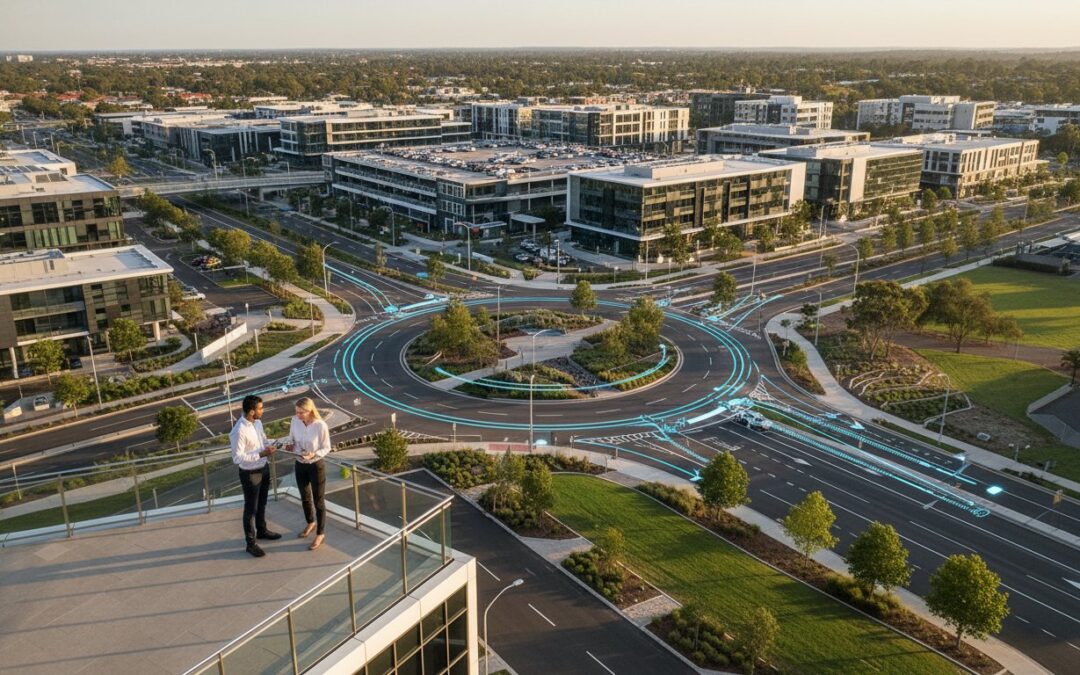
Across Australia, regions are experiencing significant population growth, driving the need for thousands of new homes and jobs to support expanding communities. As planning regulations continue to evolve, the standards for development applications are becoming increasingly specific and complex. Engaging a qualified traffic engineer is critical for expertly navigating these new and intricate requirements. Furthermore, to ensure legal compliance, your engineering services must be performed or supervised by a registered professional engineer in accordance with relevant state and territory legislation.
You likely recognise that complex council regulations and non-compliant traffic reports are the primary drivers of planning approval delays and high redesign costs. This guide outlines exactly how to secure council approval through technical precision and senior-level accountability. We will detail the requirements for a compliant Traffic Impact Assessment (TIA), explain the necessity of vehicle swept path analysis, and demonstrate how efficient car park design can maximize your project’s space. You’ll learn how direct access to senior experts ensures your submission meets Australian Standard AS 2890.1 and the current local government planning requirements.
Key Takeaways
- Learn why early involvement from a traffic consultant reduces long-term redesign costs and streamlines infrastructure integration for complex developments.
- Understand the technical requirements of a Traffic Impact Assessment (TIA) and how a qualified traffic engineer ipswich utilizes precise data collection to satisfy council mandates.
- Master the application of AS 2890.1 standards to ensure car park designs are compliant and ready for final certification and the issuance of an Occupation Certificate.
- Discover how AutoTURN software simulations for vehicle swept path analysis provide the technical proof required for safe site access and internal vehicle movements.
- Benefit from a “no-gatekeepers” approach that provides direct access to senior principals who manage your project personally from inception to final approval.
Table of Contents
-
The Strategic Role of a Traffic Engineer in Modern Developments
-
Essential Components of a Traffic Impact Assessment (TIA) Report
-
Ensuring Compliance with Australian Standards for Car Park Design
-
Technical Precision in Vehicle Swept Path and Access Assessment
-
Securing Planning Approvals Through Expert Engineering Documentation
The Strategic Role of a Traffic Engineer in Modern Developments
Traffic engineering is a specialized branch of civil engineering that focuses on the safe and efficient movement of people and goods. Within the Australian urban planning framework, this discipline ensures that new infrastructure supports rapid growth without compromising road safety. Engaging a qualified traffic engineer ipswich during the feasibility stage is a strategic move. It allows for the identification of access constraints and parking shortfalls before they become embedded in the site plan, saving significant time during the council review phase.
Early involvement from a consultant significantly reduces long-term costs in Traffic Engineering. When technical assessments are conducted late in the process, developers often face expensive redesigns to meet council’s rigorous standards. Professional engineering provides a bridge between civil design and regulatory compliance. This ensures that every driveway grade, intersection layout, and parking bay meets the specific metrics required by the Professional Engineers Act 2002 and the Ipswich City Plan 2025.
To better understand the complexities and critiques of modern traffic planning, watch this helpful video:
Supporting Development Applications (DA)
Ipswich City Council mandates formal traffic reports when a project triggers specific growth or safety thresholds. This includes residential subdivisions, commercial hubs, or industrial expansions that alter trip generation patterns. A senior engineer acts as the primary point of contact, liaising directly with council planners to resolve technical queries. We ensure all documentation, including Traffic Guidance Schemes, adheres to the latest state-level transport guidelines and national safety frameworks. This direct accountability minimizes the risk of information loss and prevents the approval delays common in larger, impersonal firms.
Mitigating Road Network Impacts
Every development has a footprint on the existing road network. We conduct rigorous analysis to determine how additional vehicle movements impact existing traffic flow and intersection performance. Beyond vehicle flow, we develop strategies for pedestrian connectivity and public transport access. This ensures your project complies with the Local Government Infrastructure Plan (LGIP) while maintaining community safety. A traffic engineer ipswich provides the empirical data needed to justify your development’s impact, balancing commercial yield with long-term infrastructure sustainability for the region.
Essential Components of a Traffic Impact Assessment (TIA) Report
A comprehensive traffic impact assessment is the cornerstone of any major development application in Queensland. It serves as the primary technical document that justifies a project’s viability to council planners. To produce a compliant report, we utilize rigorous data collection techniques. This includes manual traffic counts, radar-based speed surveys, and detailed peak hour analysis. Securing a compliant report from a qualified traffic engineer ipswich ensures your submission aligns with the Ipswich City Plan 2025 and the Professional Engineers Act 2002.
Our expertise covers an exhaustive range of project environments including childcare centres, medical clinics, industrial warehouses, multi-unit residential flat buildings, retail shopping complexes, service stations, fast food drive-throughs, primary and secondary schools, gymnasiums, mixed-use high-rise towers, aged care facilities, veterinary hospitals, and logistics distribution hubs. Professional standards maintained by the Institute of Transportation Engineers (Australia & New Zealand) provide the technical framework for our methodologies. We use industry-standard modelling software to simulate traffic flow and predict potential bottlenecks before they occur on-site.
Traffic Modelling and Intersection Analysis
We evaluate the Level of Service (LoS) for both existing and proposed road conditions to ensure network stability. SIDRA modelling is our primary tool for predicting future traffic demand at critical nodes. If an intersection is nearing capacity, we propose specific mitigation measures such as lane reconfigurations or signal timing adjustments. This data-driven approach allows a traffic engineer ipswich to provide concrete evidence that a development will not cause adverse congestion. For complex projects, you can contact our senior principals to discuss site-specific intersection requirements.
Parking Demand and Supply Analysis
Calculating the required number of parking spaces is a critical step that depends on land-use type and Ipswich City Council Development Control Plans (DCPs). We don’t just follow generic tables; we conduct empirical demand assessments to justify parking shortfalls where necessary. This involves assessing the impact of visitor and staff parking on the surrounding street network. By providing empirical evidence, we help developers maximize their building footprint while still meeting essential accessibility standards and AS 2890.1 requirements.
Ensuring Compliance with Australian Standards for Car Park Design
Compliance with AS 2890.1 is a mandatory technical requirement for securing an Occupation Certificate (OC) in Queensland. A traffic engineer ipswich must certify that all off-street parking facilities meet these national standards to prevent expensive post-construction modifications. Our design process focuses on optimizing car park layouts to maximize parking yield while maintaining strict adherence to safety benchmarks. This includes verifying pedestrian sight distances at exit points and ensuring lighting requirements meet the necessary visibility standards for safe operation.
Off-Street Parking and AS2890.1 Adherence
Australian Standard AS 2890.1 (2004) dictates specific dimensions for parking bays, circulation aisles, and blind aisles based on the designated user class. For instance, residential parking (User Class 1A) has different width requirements compared to short-term retail spaces (User Class 3). We also manage compliance for disabled parking under AS 2890.6, which requires specific shared zones and vertical clearances. A critical technical check involves ensuring that structural elements like columns and walls do not encroach on the required clearance zones. even minor deviations can lead to non-compliance, stalling the final approval process.
Driveway Ramp Grade and Access Assessments
Calculating driveway ramp grades requires high-level technical precision to prevent vehicle underbody scraping. We ensure that maximum gradients don’t exceed the 1:4 (25%) limit for private driveways or the 1:5 (20%) limit for public facilities as specified in the standards. Transition zones at the top and bottom of ramps are non-negotiable for maintaining vehicle clearance during grade changes. We assess driveway widths and entrance/exit sight lines to ensure safety for both motorists and pedestrians on the adjacent road network. Our driveway ramp grade assessments are conducted by RPEQ-certified professionals to ensure they meet the specific requirements of the Ipswich City Plan 2025.
Securing these certifications requires a meticulous approach. We provide direct access to senior principals who perform the technical work themselves, ensuring no information is lost between site assessment and report finalization. This hands-on methodology distinguishes our service from larger firms where junior staff often handle complex compliance checks. By engaging a specialized traffic engineer ipswich, you ensure your car park design is both efficient and fully compliant with all local and national regulatory frameworks.
Technical Precision in Vehicle Swept Path and Access Assessment
A swept path analysis is a non-negotiable technical requirement for developments involving commercial deliveries or waste management. Ipswich City Council requires these simulations to confirm that vehicles can enter and exit the site in a forward direction without compromising road safety. A traffic engineer ipswich uses these simulations to identify potential "pinch points" in the site layout before construction begins. This proactive approach prevents the high costs associated with redesigning non-compliant entry gates or loading docks. Our senior engineers perform these assessments personally to ensure the technical work matches the project’s strategic goals from day one.
Utilising AutoTURN software, we create a digital twin of your site to test vehicle manoeuvrability. This isn’t just about passenger cars; it’s about ensuring heavy vehicles can navigate tight urban environments. We model the footprint of the vehicle’s body and its wheel paths to ensure no part of the vehicle strikes curbs, walls, or parked cars. These simulations are essential for verifying the functionality of internal driveways and basement ramps. Providing this level of technical detail in your submission builds immediate confidence with council assessors and speeds up the approval process.
AutoTURN Modelling for Large Vehicles
Selecting the correct design vehicle is critical for a valid assessment. We select vehicles based on the project’s specific land use and council requirements. Our modelling capabilities include:
-
8.8m Medium Rigid Vehicles (MRV): Typically used for standard waste collection and retail deliveries.
-
12.5m Heavy Rigid Vehicles (HRV): Required for larger commercial sites and construction access.
-
19m Articulated Vehicles (AV): Essential for industrial warehouses and logistics hubs.
We simulate complex multi-point turns and reversing manoeuvres for sites with limited space. Our reports provide clear, high-resolution diagrams that prove site feasibility. This direct accountability from our senior principals means you don’t deal with junior staff who may lack the experience to handle difficult site constraints.
Compliance with Access and Servicing Standards
Commercial vehicle facilities must strictly adhere to AS 2890.2. This standard governs the design of loading bays to ensure they don’t block general traffic flow or pedestrian paths. We also conduct rigorous checks on vertical clearances for basement entries and loading areas to prevent structural damage from high-clearance vehicles. Our assessments include driveway width verification and entrance/exit sight line analysis to maintain safety for all road users. You can book a vehicle swept path analysis directly with our experts to ensure your site is fully compliant with all Ipswich City Council servicing requirements.
The technical precision we bring to swept path analysis ensures that your development is functional, safe, and ready for council endorsement. By eliminating the guesswork, we help you avoid the delays and redesign costs that often plague projects with poorly planned vehicle access. Our hands-on approach ensures that the expert who starts your project is the one who finishes it, providing a consistent point of contact for all your engineering needs.
Securing Planning Approvals Through Expert Engineering Documentation
The final stage of any development application involves consolidating technical data into a submission that satisfies the Ipswich City Council’s planning officers. While previous sections have detailed the technical requirements of TIAs and swept paths, the success of a project often rests on the authority of the documentation provided. Engaging a traffic engineer ipswich who understands the nuances of the Ipswich City Plan 2025 ensures that your submission is not just a collection of data, but a persuasive argument for site viability. We provide robust traffic data to finalise the Statement of Environmental Effects (SEE), ensuring all potential impacts are mitigated through empirical evidence.
Beyond the initial application, we prepare detailed documentation for the construction and operational phases. This includes a Traffic Management Plan (TMP) designed to manage site access, vehicle movements, and safety during the build. Unlike firms that provide generic templates, our TMPs are site-specific and compliant with state-level regulatory standards. This level of detail prevents work stoppages and ensures that your project maintains a high standard of safety and accessibility from ground-breaking through to final occupation.
Direct Access to Senior Engineering Principals
Our "no-gatekeepers" approach is a fundamental brand signature. We provide clients with direct access to senior principals who bring over 15 years of experience in Australian transport planning to every project. This senior-level accountability leads to faster council negotiations because the person discussing the technicalities with council planners is the same person who performed the analysis. We promise personnel continuity; the expert who initiates your project relationship will be the one performing the technical work. You don’t have to worry about your project being passed to junior staff. You can learn more about our expert team and approach to see how this direct involvement benefits your development.
Comprehensive Documentation for Council Submission
A seamless DA submission requires the expert packaging of TIA reports, vehicle swept path diagrams, and compliant car park designs. When council issues a Request for Information (RFI), we respond with technical authority and precision. Our RPEQ-certified engineers address council concerns directly, providing the additional modelling or data required to resolve queries without unnecessary delays. This meticulous attention to detail ensures that your documentation meets the high standards required by the Professional Engineers Act 2002. Contact ML Traffic Engineers Australia to discuss your project requirements and secure the technical expertise needed for a successful Ipswich council approval.
Our methodology focuses on results-oriented engineering. By combining technical precision with direct principal accountability, we eliminate the bureaucracy that often stalls planning approvals. Whether you’re developing a childcare centre, an industrial warehouse, or a multi-unit residential complex, our documentation provides the technical foundation your project needs to move from the drawing board to completion. We don’t just provide reports; we provide a pathway to approval through seasoned expertise and dependable engineering practices.
Secure Your Development Approval with Technical Authority
Navigating the technicalities of the Ipswich City Plan 2025 and the Professional Engineers Act 2002 requires a meticulous, data-driven approach. Successful council submissions rely on the technical accuracy of Traffic Impact Assessments and the precision of AutoTURN swept path simulations. By ensuring your project meets all AS 2890 requirements for car park design and vehicle access, you eliminate the risk of costly redesigns and planning delays. Engaging an experienced traffic engineer ipswich provides the senior-level accountability needed to resolve council RFIs efficiently.
With over 15 years of specialized experience in Australian transport planning, we provide direct access to senior principals who manage your project from inception to final approval. This personnel continuity ensures that your engineering documentation is prepared with the highest level of technical expertise. Our hands-on methodology guarantees that your development is functional, safe, and fully compliant with national standards. Take the next step in your project’s lifecycle with confidence and professional assurance.
Get a compliant Traffic Engineering Report for your DA
Frequently Asked Questions
What is a Traffic Impact Assessment (TIA) and why is it needed?
A Traffic Impact Assessment (TIA) is a technical document that evaluates how a proposed development will influence the surrounding road network and transport infrastructure. It’s required by Ipswich City Council to ensure that new projects don’t compromise road safety or exceed the capacity of existing intersections. The report provides empirical data on trip generation and distribution, allowing planners to determine if mitigation measures are necessary to maintain network performance.
How long does it typically take to prepare a traffic report for council?
Preparation timelines for a formal traffic report typically range from two to four weeks depending on the project’s complexity and data requirements. This period includes site inspections, traffic counts, and the technical modelling of intersections or car park layouts. Engaging a traffic engineer ipswich early in the planning phase ensures that all technical assessments are completed in alignment with your Development Application (DA) submission deadlines, preventing unnecessary delays in the council review process.
When is a professional traffic engineer required for a development application?
A professional engineer is required when a development triggers specific trip generation thresholds or involves complex access, parking, or safety considerations. Under the Professional Engineers Act 2002, any professional engineering services in Queensland must be performed or supervised by a Registered Professional Engineer of Queensland (RPEQ). This legal requirement ensures that all reports, including car park designs and swept path analyses, meet the rigorous standards expected by local government authorities and state agencies.
What is the difference between AS 2890.1 and AS 2890.2?
AS 2890.1 (2004) specifies the requirements for off-street car parking facilities, focusing on passenger vehicles and standard parking bay dimensions. In contrast, AS 2890.2 (2018) governs off-street commercial vehicle facilities, including the design of loading docks and access for heavy vehicles like trucks and vans. Each standard has distinct metrics for gradients, clearances, and aisle widths that must be strictly followed to secure an Occupation Certificate and ensure site functionality.
Can a traffic engineer help if my car park design has been rejected by council?
Yes, an engineer can resolve car park design rejections by identifying specific points of non-compliance with Australian Standards or council planning schemes. We review the council’s Request for Information (RFI) or refusal notice to develop technical solutions that maximize space while meeting regulatory mandates. A traffic engineer ipswich provides the technical authority needed to negotiate with council planners, often finding design alternatives that satisfy safety requirements without sacrificing significant parking yield.
What is swept path analysis and is it mandatory for all developments?
Swept path analysis is a digital simulation used to verify that a design vehicle can navigate a site safely without striking obstacles. While not mandatory for every minor residential project, it’s a standard requirement for developments involving waste collection, commercial deliveries, or basement parking. Our senior principals use AutoTURN software to provide clear diagrams proving that vehicles can enter and exit in a forward direction, which is a critical requirement for council endorsement.
Which suburbs do you cover?
Amberley, Ashwell, Augustine Heights, Barellan Point, Basin Pocket, Bellbird Park, Blackstone, Booval, Brassall, Brookwater, Bundamba, Calvert, Camira, Carole Park, Churchill, Coalfalls, Collingwood Park, Deebing Heights, Dinmore, East Ipswich, Eastern Heights, Ebenezer, Ebbw Vale, Flinders View, Gailes, Goodna, Goolman, Grandchester, Haigslea, Ipswich, Ironbank, Jeebropilly, Karalee, Leichhardt, Lower Mount Walker, Moores Pocket, Mount Forbes, Mount Mort, Mount Walker West, Muirlea, Mutdapilly, New Chum, Newtown, North Booval, North Ipswich, One Mile, Peak Crossing, Pine Mountain, Purga, Raceview, Redbank, Redbank Plains, Ripley, Riverview, Rosewood, Sadliers Crossing, Silkstone, South Ripley, Springfield Central, Swanbank, Walloon, West Ipswich, White Rock, Willowbank, Woodend, Wulkuraka, Yamanto.

Disclaimer
The content on www.mltraffic.com.au, including all technical articles, guides, and resources, is provided for general informational and educational purposes only. It is not intended to constitute professional advice in traffic engineering, transportation planning, development approvals, or any other technical or legal field.
While ML Traffic Engineers makes every reasonable effort to ensure the accuracy, completeness, and timeliness of the information published, we do not provide any warranties or representations (express or implied) regarding its reliability, suitability, or availability for any particular purpose. Any reliance you place on the content is strictly at your own risk.
In no event shall ML Traffic Engineers, its directors, employees, authors, or affiliates be liable for any direct, indirect, incidental, special, consequential, or punitive damages (including, without limitation, loss of profits, data, or business opportunities) arising out of or in connection with the use of, or inability to use, any information provided on this website.
The articles and guides on this site are not a substitute for engaging a qualified, registered professional traffic engineer (such as an NPER or RPEQ engineer) to assess your specific project requirements. For tailored advice, compliance assessments, or traffic engineering services, please contact a competent professional.
This disclaimer may be updated from time to time without notice. By accessing or using this website, you agree to be bound by the most current version of this disclaimer.
