
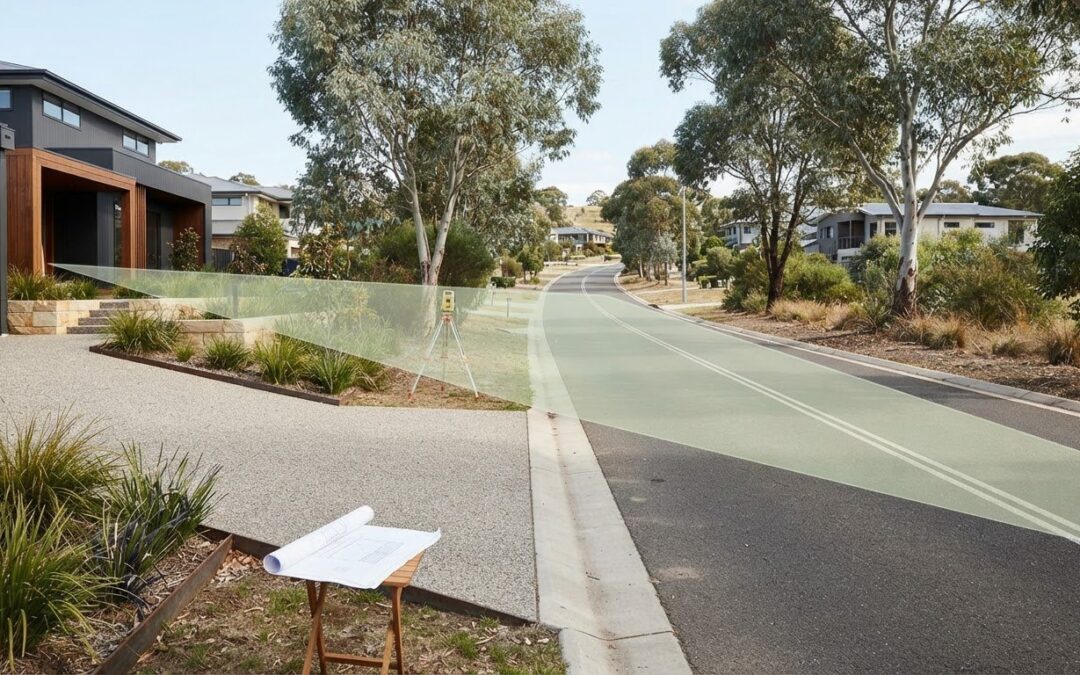
A clear view from a driveway may still be inadequate for a safe turn if the assessment starts from the wrong position or overlooks how drivers enter the road. A sight distance assessment for driveway access checks whether drivers can see approaching traffic from the positions relevant to the proposed movements, taking the site layout, road conditions and applicable authority criteria into account.
It’s understandable to be unsure what a council or road authority will need, particularly when a request for more information could affect planning discussions. An engineering assessment can bring site observations and access design evidence together, but it doesn’t guarantee approval. Requirements depend on the project and the relevant authority.
This guide explains what an assessment checks, what can affect visibility and what information may help an engineer review a driveway. It covers why road speed, gradients, vegetation, fences and other obstructions matter, and how to organise useful measurements, plans and photographs. ML Traffic Engineers Australia is an Australian traffic engineering and transport planning consultancy. The aim here is to help you prepare a clear evidence package and understand the basis of an access decision.
Key Takeaways
- A sight distance assessment for driveway access considers whether drivers can see approaching traffic from the viewpoints relevant to the proposed movements.
- Assessment should reflect the driveway layout and actual site conditions, not just a plan viewed in isolation.
- Road alignment, the speed environment and visibility obstructions can all affect the review. Applicable criteria may vary by road authority and project.
- Bring together available plans, survey information, site photographs and access details to help an engineer understand the proposal.
- Specialist review can inform design and approval discussions when visibility is constrained or an authority requests further evidence, but it can’t guarantee approval.
What is a sight distance assessment for driveway access?
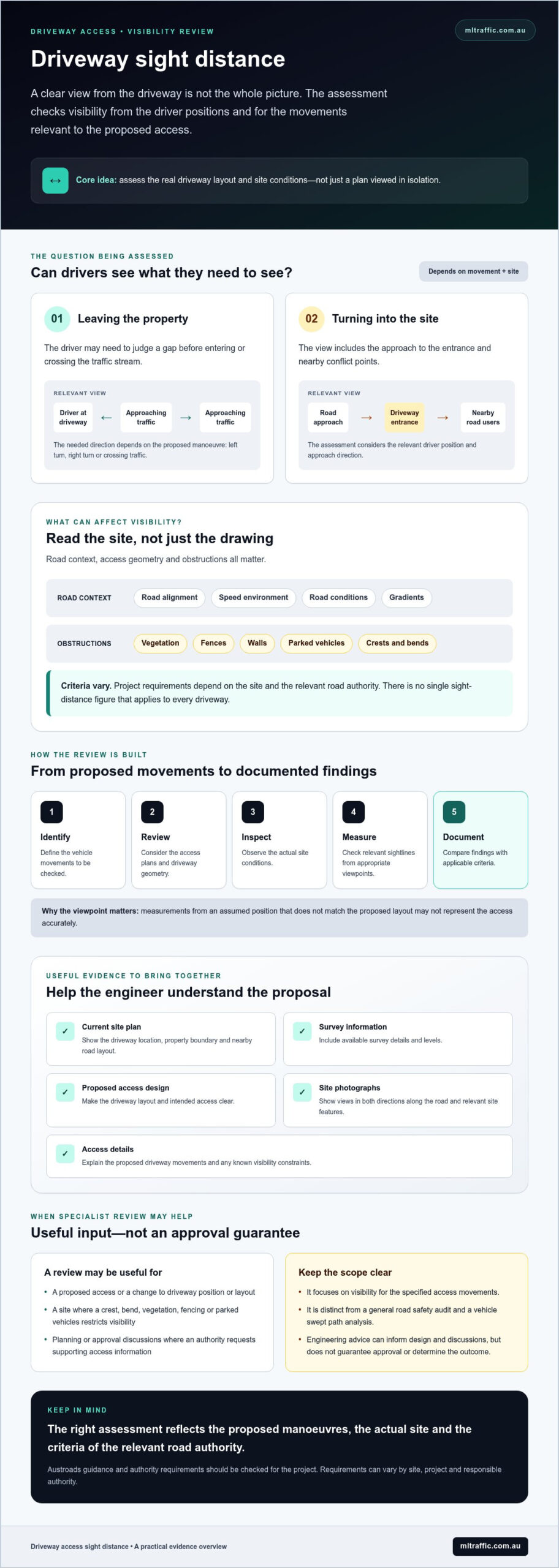
A sight distance assessment for driveway access evaluates whether drivers have enough visibility to make the movements required at a particular driveway. It considers what a driver can see from relevant positions, including whether they can identify approaching traffic in time to enter or cross the traffic stream, and whether other drivers can see a vehicle turning into the site.
These are related but different visibility tasks. A driver leaving a property may need to judge a gap in traffic before moving onto or across the road. A driver turning in needs to see the driveway entrance and respond to nearby vehicles, pedestrians or other road users. The assessment should reflect the proposed access layout, driver position and relevant approach direction, rather than relying on a single view from the property boundary.
The video below demonstrates a general method for measuring sight distance at an intersection. Use it to understand the measurement concept, not as guidance on Australian project criteria.
What visibility does a driver need at a driveway?
The view needed depends on the manoeuvre. A driver exiting may need to look along the road in one or both directions, depending on whether they’re turning left, turning right or crossing traffic. For a vehicle turning into the driveway, the relevant view includes the approach to the entrance and nearby conflict points. Road alignment, the speed environment and obstructions can affect what is visible. Sight distance principles provide general background, but project criteria must be checked against current Austroads guidance and the relevant road authority’s requirements. There’s no single figure that applies to every site.
When might a driveway sight distance assessment be requested?
A review may be useful for a proposed access, a change to a driveway’s position or layout, or a site where a crest, bend, vegetation, fencing or parked vehicles restricts visibility. A council or road authority may also request supporting access information as part of planning or approval discussions. This doesn’t mean every driveway or development automatically needs a formal report.
A sight distance assessment is distinct from a general road safety audit, which considers broader road safety matters, and from a vehicle swept path analysis, which checks whether a design vehicle can manoeuvre through a layout. The assessment focuses on visibility for the specified access movements. Its scope and criteria depend on the site context and the authority responsible for the road, so an engineering review can inform discussions but doesn’t determine the approval outcome.
How is sight distance assessed for driveway access?
A sight distance assessment for driveway access follows a defined process: identify the vehicle movements, review the access plans, inspect the site, measure relevant sightlines and document how the findings compare with applicable criteria.
The review needs to match the proposed driveway geometry and the way drivers will use it. An exit movement may require a view along the road before a driver enters or crosses traffic. A vehicle turning into the site presents a different visibility task, so the assessment considers the relevant driver position and approach direction for each movement. Measurements taken from an assumed position that doesn’t match the proposed layout may not represent the access accurately.
What site information should be collected?
Start with a current site plan showing the driveway location, property boundary and nearby road layout. Include available survey information, levels and details of the proposed access design. Together, these help the reviewer understand the relationship between the driveway, road surface and driver viewpoints.
Site photographs can show context that may not be clear on a plan. Record views in both directions along the road and note visible features such as walls, fences, vegetation and parked vehicles. Existing information may be enough to scope the review, but the engineer may need to confirm whether further survey or measurement is required. The evidence needed depends on the site and assessment scope.
How are visibility constraints identified and recorded?
The site review considers horizontal alignment, such as bends, and vertical alignment, such as crests or dips. Road and driveway grades can also affect what a driver can see from the relevant position. Sightlines are checked for the specified movements, then compared with the criteria confirmed for the project and relevant road authority.
Record obstructions with their location and likely effect on visibility. These may include fixed features, such as retaining walls, and variable conditions, such as planting or parked vehicles. A clear photograph from one angle doesn’t prove that every required sightline is available.
- Confirm the movement: Note whether vehicles will enter, exit, turn or cross traffic.
- Show the geometry: Provide the proposed driveway position and available road and site levels.
- Document the conditions: Include dated photographs and identify relevant obstructions.
Assessment findings should state the information reviewed, relevant assumptions and any limitations. A single site visit captures conditions at a particular time, so temporary obstructions or changing vegetation may need to be considered separately. For details of ML Traffic Engineers’ traffic engineering services, refer to its service information.
Which design factors and Australian requirements affect driveway sight distance?
A sight distance assessment for driveway access needs to account for the site and road environment together. The road speed environment, alignment and driveway position shape the available view, while the relevant council or road authority’s requirements determine which criteria apply. The same driveway arrangement may therefore need different consideration in different settings.
Use the comparison below to distinguish the main factors an engineer reviews. It’s a project-specific assessment, not a single national checklist with one distance that suits every access.
| Factor | What to consider | Why it matters |
|---|---|---|
| Site geometry | Road curves or crests, gradients, driveway angle and position, width, and boundary treatments. | These features can change the driver’s viewpoint or limit the length of a clear sightline. |
| Traffic context | Road speed environment, approach directions and the movements drivers need to make. | The visibility task depends on how vehicles approach and whether drivers are entering, turning or crossing traffic. |
| Visibility obstructions | Walls, fences, planting, parked vehicles and other fixed or temporary features. | An obstruction may screen approaching traffic or make an entering vehicle harder to see. |
| Approval requirements | Applicable Austroads guidance, relevant Australian Standards, and the responsible authority’s current access requirements. | Requirements and assessment scope depend on the road, jurisdiction and proposal. |
How do road geometry and driveway layout change the assessment?
A bend can screen traffic approaching from one direction. A crest may restrict the view over the road, while gradients can affect the driver’s line of sight. A skewed driveway angle may also change where a driver needs to look before entering. Driveway width and boundary treatments influence the position from which that view is assessed.
Keep existing conditions distinct from proposed changes. For example, show current fence and planting locations separately from any planned access relocation or boundary alteration. This helps the reviewer see which constraints exist now and which may change under the proposal.
How should Australian guidance and authority requirements be used?
Confirm which edition of Austroads guidance and which Standards Australia publications apply to the specific assessment. Then check the responsible road authority’s access and development requirements for the site. A council road and a road managed by a state authority may have different supplementary requirements.
Don’t treat AS 2890.1 or another document as a universal sight distance rule. Its relevance depends on the assessment question and project context. Confirm the applicable criteria before comparing measured visibility with them, and record any assumptions or authority-specific direction used in the review.
How can you prepare plans and evidence for a driveway sight distance assessment?
A well-organised information pack helps an engineer understand the proposed access, the site as it exists and the decision being considered. The documents needed for a sight distance assessment for driveway access depend on the project scope and any council or road authority request. Start with what you have, and identify information that may need to be checked or measured on site.
What should an assessment information pack include?
Assemble the available documents and label proposed changes clearly. A practical starting checklist is:
- Project details: Site address, proposed use, development application stage and the decision or authority request the assessment will inform.
- Access plans: Current and proposed driveway layouts, showing the property boundary, road layout, driveway position and intended vehicle movements.
- Survey and design information: Available road and boundary surveys, levels, road geometry and relevant design drawings. Note the survey date and whether the information reflects current site conditions.
- Site photographs: Dated views along the road from the access and from the approaches, where available. Include relevant walls, fences, planting, parked vehicles and other potential obstructions.
- Known changes or constraints: Record planned or recent changes to parking, landscaping, fencing or the driveway, and flag anything that could affect visibility.
If the parking layout affects where vehicles wait, manoeuvre or approach the access, include the relevant plan context. For related parking design considerations, see the car park design services.
What should applicants clarify before commissioning the assessment?
Be specific about what the assessment needs to address. Share the authority’s written information request, if there is one, and clarify whether the review should consider vehicles entering, exiting or both. A proposed driveway change may need to be assessed against the new layout, while an existing access review may focus on current conditions.
Separate confirmed details from assumptions. For example, mark a boundary location as unverified if it hasn’t been established by survey, or flag planting that may be removed as part of the proposal. This helps the engineer identify gaps without treating preliminary information as fact. An engineering review can then determine whether a site inspection or additional survey is needed to confirm driver positions, levels or sightline constraints.
Scope matters. A drawing or photograph may help explain the site, but it may not provide enough detail to verify road geometry or sightlines. Ask what evidence is needed for the specific project and authority request before relying on an existing plan as complete. Review the relevant service information to see how ML Traffic Engineers’ traffic engineering services may relate to your project.
When should a traffic engineer assess driveway access sight distance?
Consider specialist review when visibility appears restricted, a driveway is being added or relocated, or a council or road authority asks for evidence about access. A bend, crest, slope or boundary feature may make it difficult to judge whether drivers can see approaching traffic from the position they need to use. Reviewing these conditions before finalising a proposal can help identify design questions that need to be addressed.
An authority request is a useful prompt to confirm the assessment scope. Check which vehicle movements need to be considered, what plans or site information are available, and which criteria the authority expects the review to address. A sight distance assessment for driveway access can inform design and approval discussions, but it doesn’t guarantee that an access proposal will be approved. The decision remains with the relevant authority.
How does sight distance review relate to other access assessments?
Each assessment answers a different question. Sight distance review considers what drivers can see. Vehicle swept path analysis considers whether a design vehicle can manoeuvre through the proposed layout. A driveway ramp grade assessment considers the driveway’s gradient and transitions.
A constrained site may need more than one assessment, depending on its design and the authority’s requirements. For example, an access could have adequate visibility but still need review of vehicle manoeuvring or ramp grades. These scopes are related, but one doesn’t replace another.
What can you expect from a specialist traffic engineering review?
A traffic engineer can review the project information, relevant site conditions and applicable authority requirements to establish the scope of the work. The review may identify gaps in the plans or evidence and indicate whether further site information or survey is needed. Confirm the required deliverables and evidence for your project rather than assuming every assessment follows the same scope.
ML Traffic Engineers is a national Australian consultancy focused on traffic engineering and transport planning, with over 15 years of experience. Its services include traffic impact assessments, vehicle swept path and access assessments, and car park design and demand assessments. If you have project plans or an authority request, contact the traffic engineering team to discuss the relevant assessment scope.
Prepare your driveway access evidence with confidence
A sound driveway access decision depends on more than a clear view in one direction. A sight distance assessment for driveway access considers the proposed vehicle movements, driver viewpoints, site constraints and criteria relevant to the road authority and project.
Before seeking a review, gather current access plans, available survey information, dated site photographs and any authority request. Confirm whether the assessment needs to consider vehicles entering, exiting or both. These details help an engineer identify what is known and whether further site information may be needed.
ML Traffic Engineers provides traffic engineering and transport planning services, including traffic impact assessments, swept path and access assessments, and car park design and demand assessments. Its national Australian consultancy has over 15 years of experience. An engineering review can support design and planning discussions, but the relevant authority makes the access decision.
Have project plans or an information request to hand? Contact ML Traffic Engineers to discuss your project and the relevant assessment scope.
Frequently Asked Questions
When is a sight distance assessment required for a driveway?
Whether a formal assessment is needed depends on the project and the relevant council or road authority. It may be requested for a proposed driveway, a change to an existing access, constrained visibility or a development application review. An authority may ask for supporting access information before considering a proposal. Don’t assume every driveway automatically needs a report. Check the application requirements and any written authority request to confirm what evidence is needed.
How is sight distance measured at a driveway?
Sight distance is checked from the driver position relevant to the proposed movement, looking towards the approaching traffic or access area that must be visible. The assessment considers the driveway layout, road alignment, grades and any obstructions that affect the view. Measurements are then compared with the criteria confirmed for the project and responsible authority. The method and measurement points can vary, so a single assumed position or universal distance shouldn’t be applied to every site.
What can obstruct sight distance from a driveway?
Obstructions can include fixed features such as buildings, retaining walls, fences and boundary structures, as well as vegetation, parked vehicles or temporary items. Road geometry can also limit visibility: a bend may screen approaching traffic, while a crest or dip can restrict the view along the road. The assessment should consider what drivers can see from relevant positions and record conditions that may change, such as planting or vehicles parked near the access.
Which Australian standards apply to driveway sight distance?
Applicable documents depend on the access, road context and authority requirements. Austroads’ Guide to Road Design may provide relevant road-design guidance, while AS/NZS 2890.1 may be relevant to off-street parking and driveway layout. Neither should be assumed to set a universal sight-distance rule for every driveway. Confirm the current applicable editions, any state road authority supplements and local council requirements for the specific project before applying criteria.
What information should I provide for a driveway sight distance assessment?
Provide the site address, proposed use, current and proposed driveway plans, and any council or road authority request. Include available road and boundary surveys, levels, access design details and dated photographs showing the driveway and road approaches. Note known constraints or proposed changes to parking, fences and landscaping. Identify information that is uncertain rather than presenting it as confirmed. The engineer can then advise whether a site inspection or additional survey may be needed.
Does a sight distance assessment guarantee driveway approval?
No. An assessment provides engineering evidence about visibility for the movements and conditions within its agreed scope. It can inform access design and planning discussions, but the relevant council or road authority makes the decision and may consider other planning, access or site requirements. The assessment doesn’t guarantee approval, nor does it replace other reports that may be requested. Confirm the authority’s requirements and the project scope before relying on an assessment for an application.

Disclaimer
The content on www.mltraffic.com.au, including all technical articles, guides, and resources, is provided for general informational and educational purposes only. It is not intended to constitute professional advice in traffic engineering, transportation planning, development approvals, or any other technical or legal field.
While ML Traffic Engineers makes every reasonable effort to ensure the accuracy, completeness, and timeliness of the information published, we do not provide any warranties or representations (express or implied) regarding its reliability, suitability, or availability for any particular purpose. Any reliance you place on the content is strictly at your own risk.
In no event shall ML Traffic Engineers, its directors, employees, authors, or affiliates be liable for any direct, indirect, incidental, special, consequential, or punitive damages (including, without limitation, loss of profits, data, or business opportunities) arising out of or in connection with the use of, or inability to use, any information provided on this website.
The articles and guides on this site are not a substitute for engaging a qualified, registered professional traffic engineer (such as an NPER or RPEQ engineer) to assess your specific project requirements. For tailored advice, compliance assessments, or traffic engineering services, please contact a competent professional.
This disclaimer may be updated from time to time without notice. By accessing or using this website, you agree to be bound by the most current version of this disclaimer.
