
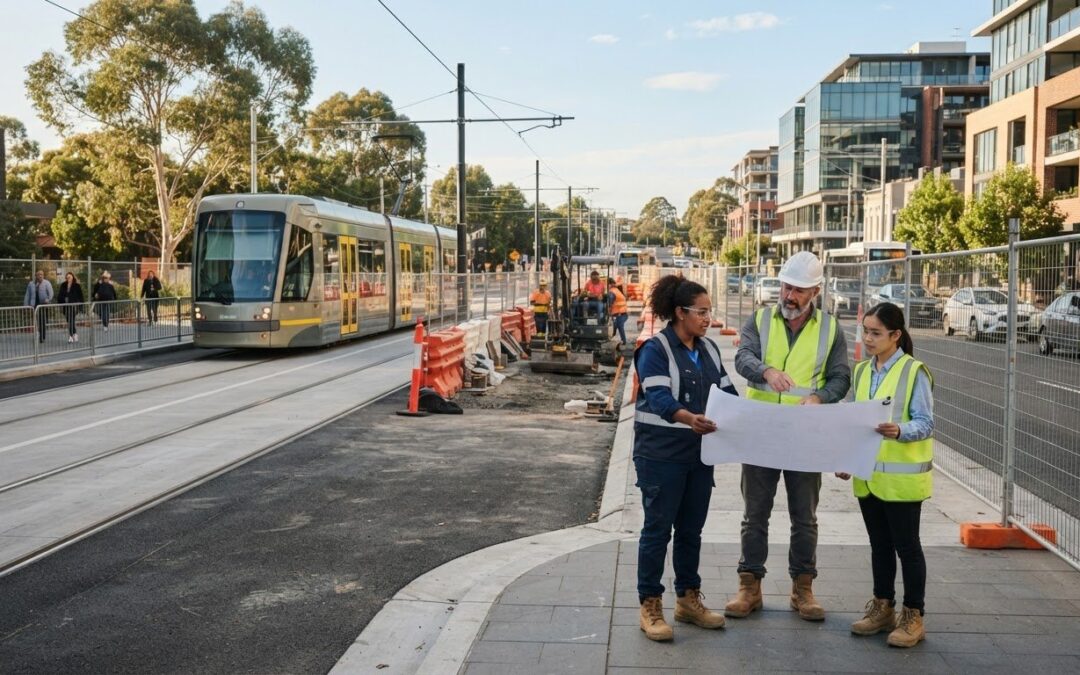
What if a worksite is safe for road traffic but still creates a hazard for tram operations? A traffic control plan for working near tram lines needs to coordinate more than vehicles. It should account for pedestrians, work activities, site access and the tram network’s safety requirements.
Road traffic management and rail safety arrangements are related, but they are not interchangeable. Works beside tram lines can affect shared road space, pedestrian routes and tram movements, so planning may involve the relevant road authority, tram operator and other project stakeholders. The required information and review pathway depend on the location and the work.
This guide covers what to gather before drafting a plan, how to compare controls for road users, pedestrians and worksite access, and how to progress the plan through review and on-site implementation. It also explains how traffic guidance schemes and traffic management plans fit into the process alongside rail operator requirements. ML Traffic Engineers Australia has over 15 years of traffic engineering and transport planning experience and prepares Traffic Guidance Schemes and Traffic Management Plans for construction activities nationwide.
Key Takeaways
- A traffic control plan for working near tram lines needs to account for road users, pedestrians, work activities and tram operations together.
- Gather current site and project information, including tram stops, crossings and rail interfaces, before selecting controls.
- Compare lane changes, closures and pedestrian diversions by assessing their effects on traffic flow, queues and site access.
- Map the review and approval pathway early, as requirements vary by jurisdiction, road authority and rail interface.
- Clear traffic documentation can turn verified project constraints into practical worksite arrangements, including NSW TGS and Traffic Management Plan requirements.
Why a traffic control plan for working near tram lines needs a tailored approach
A traffic control plan for tram-adjacent work sets out how road users and pedestrians will move around a worksite while tram operations continue or are managed through separate arrangements. It should show how the work area relates to road lanes, tram tracks, stops and crossings, and how those relationships may change as work progresses. Traffic management provides a broad overview of the discipline; a project plan applies its principles to the conditions at a specific site.
Road controls don’t automatically provide rail-specific protection or authorise access to tram infrastructure. Requirements depend on the jurisdiction, tram infrastructure manager and work activity. Road authority requirements and rail operator processes may both apply, so distinguish traffic arrangements from rail operational or protection requirements in the project documentation.
The following video offers a visual example of temporary traffic control planning. Treat its diagrams as illustrative, not as a site-specific design or a substitute for applicable Australian requirements.
What does a tram-side traffic control plan address?
The plan sets out work boundaries, access points, staging and temporary controls. It should show how vehicle and pedestrian movements will be managed at each stage, including routes affected by barriers, deliveries or equipment. A setup that works for one phase may no longer suit the site when the work area or access needs change.
Traffic documentation describes proposed road and pedestrian arrangements. Rail operational or protection arrangements are managed through the relevant tram operator’s processes. Make the interface clear without implying that signs, barriers or a traffic guidance scheme replace rail-specific authorisation or protection.
Where do road traffic and tram operations intersect?
Check track crossings, shared corridors, tram stops, track access points and adjacent road lanes. For example, a lane restriction near a crossing could affect turning movements and cause queues to extend towards the tracks. Fencing, plant or a changed pedestrian route may also limit visibility or alter how people reach a stop.
Assess these conditions against the actual site and work activity. Generic layouts can miss local constraints such as sightlines, access needs and changes between work stages. Identify where road controls meet tram operations, then coordinate the proposed arrangements through the applicable project and stakeholder review processes.
What information to gather before planning work near tram lines
Good planning starts with a reliable picture of the work, the street and the tram interface. Before drafting a traffic control plan for working near tram lines, assemble current project documents and site information. Gaps in drawings or unclear work stages can lead to controls that don’t suit actual conditions or account for every affected movement.
Which site and work details shape the plan?
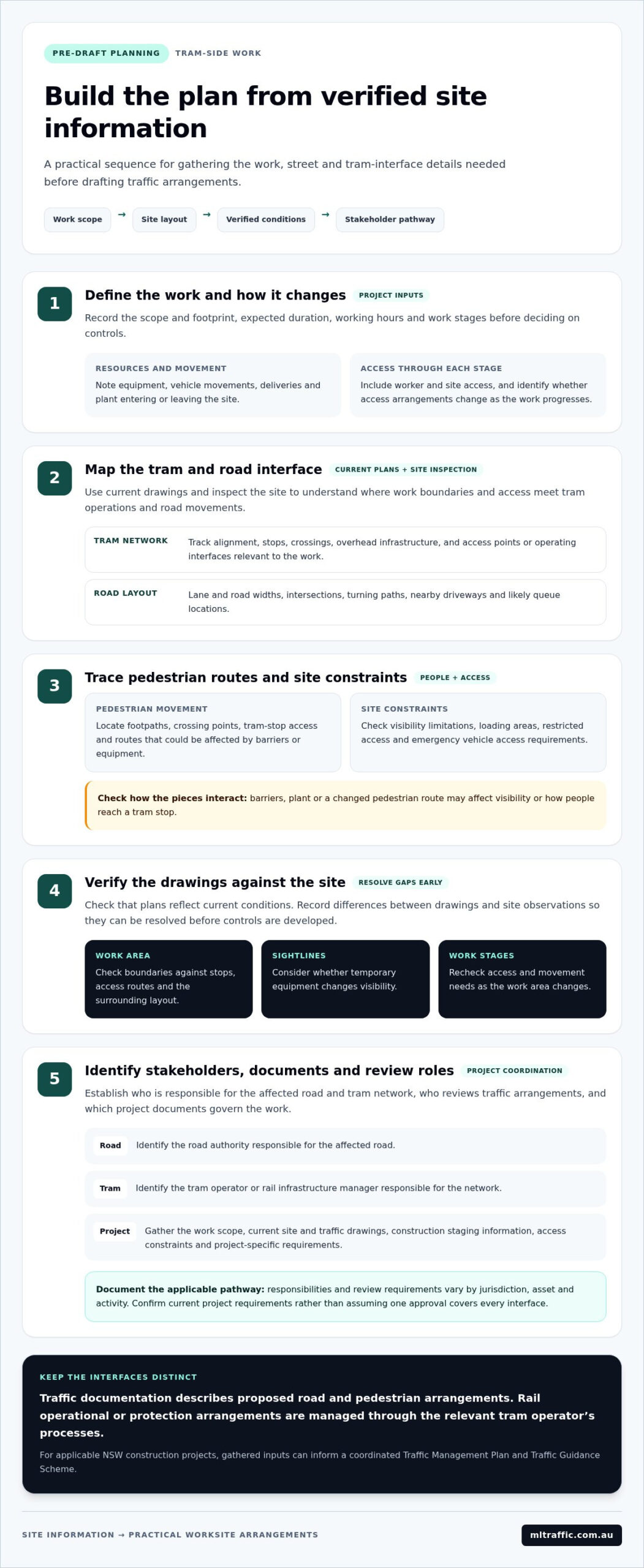
Record the work location and footprint, expected duration, working hours, stages, equipment and vehicle movements. Include how workers, deliveries and plant will enter and leave the site, and whether access arrangements change between stages. These details help the project team check that proposed traffic and pedestrian routes remain practical throughout the work.
Use current plans and a site inspection to map the surrounding layout. Check:
- Tram infrastructure: track alignment, stops, crossings, overhead infrastructure, and access points or operating interfaces relevant to the work.
- Road layout: lane and road widths, intersections, turning paths, nearby driveways and likely queue locations.
- Pedestrian movement: footpaths, crossing points, stop access and routes affected by barriers or equipment.
- Site constraints: visibility limitations, loading areas, restricted access and emergency vehicle access requirements.
Verify that drawings reflect current site conditions. A work zone that appears clear on an older plan may overlap a stop access route or restrict sightlines once temporary equipment is in place. Record any differences between the plans and site observations so they can be resolved before controls are developed.
Which stakeholders and documents inform planning?
Identify the road authority responsible for the affected road and the tram operator or rail infrastructure manager responsible for the network. Establish who manages each interface, who reviews the traffic arrangements and which project documents govern the work. Responsibilities and approval pathways vary by jurisdiction, asset and activity, so document the applicable process rather than assuming one approval covers every interface.
Gather the work scope, current site and traffic drawings, construction staging information, existing access constraints and project-specific requirements. Record coordination points, including responsibility for traffic documentation, site implementation and rail-related arrangements. Confirm the current project requirements before relying on a permit, approval or notification pathway.
For applicable NSW construction projects, these inputs can inform a coordinated Traffic Management Plan and Traffic Guidance Scheme. A clear, current information set gives the project team and reviewers a sound basis for assessing proposed arrangements and identifying unresolved constraints.
How to compare traffic controls for work beside tram lines
There isn’t one standard layout for every tram-side worksite. The right option depends on the work activity, available road space, pedestrian demand, staging and the tram operator’s requirements. Compare options by considering their effects on all affected movements, not just the space needed by the crew.
Use the table as a decision aid, not a ready-made traffic layout. Site dimensions, sightlines, work staging and authority requirements must inform the final design.
| Worksite condition | Control approach to assess | Road impact | Pedestrian impact and tram interface |
|---|---|---|---|
| Work remains clear of active lanes and tram infrastructure | Maintain existing movements, with a clearly defined work boundary and site access | Generally limits changes to vehicle paths, but access or loading activity may still affect flow | Check that barriers or equipment don’t obstruct footpaths, stop access or sightlines to trams |
| Work or equipment encroaches on a road lane | Assess a staged lane change or temporary lane restriction | Review turning movements, reduced capacity and the potential for queues to extend towards intersections or tracks | Check whether the altered road layout affects crossing visibility or pedestrian access near tram stops |
| The work needs more space or blocks a route | Compare a temporary closure with a diversion or staged work area | Consider diversion routes, access to properties and how displaced traffic may affect nearby roads | Identify a continuous alternative pedestrian route and assess its interaction with crossings and tram movements |
| Plant, deliveries or workers need regular site access | Assess access points, entry timing and vehicle movements as part of the staging | Consider turning, waiting and reversing activity, and whether it could interrupt traffic or contribute to queues | Check for conflicts with pedestrian flows, track access and tram visibility |
Which control options suit different worksite conditions?
Where existing movements can be maintained without compromising worksite separation, doing so may reduce disruption. If the work footprint changes, staged restrictions can match controls to each phase. A temporary diversion may be needed if a route cannot remain open, but it introduces additional route, access and pedestrian considerations.
Plan pedestrian routing explicitly wherever a footpath, crossing or stop access is affected. Check whether people can use the alternative route and follow it without being directed into vehicle or tram movements. Assess the site and staging before selecting a layout.
How should tram-related risks influence the comparison?
Assess the work’s proximity to operating routes, potential vehicle encroachment, sightlines to approaching trams and any track access needs. A traffic control plan for working near tram lines manages road-user and pedestrian arrangements; it doesn’t replace rail protection measures or assign rail responsibilities. The tram operator or infrastructure manager may set project-specific conditions, which should be reflected in the coordinated plan.
How to prepare, review and implement the plan before work starts
A plan is useful only when it matches the work method, site conditions and relevant review requirements. For a traffic control plan for working near tram lines, define road and pedestrian arrangements alongside the rail interface, then keep those arrangements current as work progresses.
What are the main planning and review steps?
- Define the scope. Set out the work limits, activities, stages, operating hours and expected duration. Identify affected road users, pedestrian routes, property access and tram interfaces.
- Verify site information. Check current plans and site conditions, including the road layout, tracks, stops, crossings, sightlines and access points. Resolve discrepancies before using the information to develop controls.
- Develop the traffic arrangements. Select controls for each work stage. Show work boundaries, access, temporary traffic changes and pedestrian routes clearly. Consider how changed movements or queues could affect the tram corridor.
- Coordinate review. Identify the relevant road authority and tram operator or infrastructure manager. Review and approval pathways vary by jurisdiction, road authority and rail interface. Coordinate the documentation through the applicable project process before implementation.
- Brief and check before starting. Explain the arrangements, responsibilities and escalation process to the people involved. Check that the site setup matches the plan and current conditions before work begins.
- Monitor and revise. Check controls during each stage. If conditions change, assess whether the plan needs revision, record updates and communicate material changes to affected stakeholders.
A plan review is effective only when it reflects the final work method, site conditions and relevant road and rail arrangements.
How should the plan be briefed and kept current?
Make the briefing practical. Workers need to understand the work boundaries, pedestrian and vehicle routes, site access arrangements and who to notify if conditions change. A shift in equipment position, work staging or access can affect the controls, so the briefing and on-site setup should match the current plan.
Use a documented change process. If the work footprint moves, a pedestrian route becomes obstructed or operating arrangements change, assess whether the controls remain suitable. Update the plan where required, coordinate any revision through the applicable review process and brief affected people before implementing the changed arrangement. Keep the current version accessible to the project team.
For NSW construction projects, ML Traffic Engineers Australia prepares Traffic Guidance Schemes and Traffic Management Plans to support structured worksite planning. Explore traffic planning services for information about the relevant documentation.
How traffic engineering support can help coordinate tram-side works
A traffic engineering review turns verified project information into clear traffic documentation. For tram-side works, that means considering work sequencing, road-user impacts, pedestrian access and site constraints together, while identifying where road arrangements interface with tram operations. A traffic control plan for working near tram lines should reflect the documented work method and applicable authority requirements, not rely on a generic layout.
What does a traffic engineering review contribute?
Reviewing the proposed arrangements can help the project team identify information gaps and coordination points before work starts. For example, a change in work staging may alter site access or shift the area affected by a lane restriction. Recommendations should be specific to the available project information and relevant requirements. Traffic documentation supports road and pedestrian planning; it doesn’t replace rail-specific protection arrangements or approvals.
ML Traffic Engineers has over 15 years of traffic engineering and transport planning experience and provides consultancy services across Australia. For NSW construction projects, the company prepares Traffic Guidance Schemes (TGS) and Traffic Management Plans. These documents set out proposed traffic arrangements clearly and support coordination with relevant project stakeholders.
What should a project team prepare to progress the work?
A concise project pack helps establish the scope and constraints. Include:
- Work location plan and defined site limits.
- Work scope, proposed timing, hours and staging.
- Available site drawings showing roads, tracks, stops, crossings and pedestrian routes.
- Site access, delivery and equipment requirements.
- Known road authority, tram operator or infrastructure manager requirements, including review responsibilities and coordination points.
Accurate, current information helps keep traffic documentation aligned with the proposed work. If key details change, such as the work footprint or access arrangements, the team can assess whether the planned controls and stakeholder coordination need updating.
Review the traffic engineering services to see how structured traffic documentation can support construction planning. To discuss your project scope and planning requirements, contact ML Traffic Engineers.
Set your tram-side work up with clear planning
A sound traffic control plan for working near tram lines starts with verified site information and a clear understanding of the work stages. It coordinates vehicle movements, pedestrian access and worksite requirements while recognising that traffic controls don’t replace rail-specific arrangements. The appropriate controls and review pathway depend on the project, road authority and tram interface.
Gather current plans, define site access and staging, then compare control options by assessing their effects on road users, pedestrians and tram operations. Keep the documentation aligned with the final work method, and review it if site conditions or arrangements change.
ML Traffic Engineers has over 15 years of traffic engineering and transport planning experience. For NSW construction projects, the team prepares Traffic Guidance Schemes and Traffic Management Plans to document worksite traffic arrangements.
Discuss your traffic planning requirements with ML Traffic Engineers and take the next step towards clear, coordinated planning for your project.
Frequently Asked Questions
What should a traffic control plan include for work near tram lines?
A traffic control plan for working near tram lines should show the work boundaries, staging, site access and temporary arrangements for vehicles and pedestrians. It should identify affected lanes, footpaths, crossings and tram interfaces, then explain how movements will be managed during each work stage. Use current site information and include relevant project constraints. The plan documents traffic arrangements, but doesn’t by itself authorise work on tram infrastructure or provide rail-specific protection.
Do I need a separate rail safety or tram protection plan as well?
Possibly. Traffic documentation covers road-user and pedestrian arrangements, while rail protection, access and operational requirements are managed through the relevant tram operator or infrastructure manager’s processes. Whether separate documents, permits or other arrangements are required depends on the work activity, its proximity to tram assets and the applicable jurisdiction. Identify the rail interface early and coordinate the traffic plan with any rail-specific requirements. One document shouldn’t be assumed to replace the other.
Who approves a traffic control plan for work near tram tracks?
There may be more than one review or approval pathway. The relevant road authority may review traffic arrangements affecting its road network, while the tram operator or infrastructure manager may set requirements for work near its assets or operating routes. The responsible organisations and processes vary by jurisdiction and project. Identify each stakeholder’s role, required documentation and coordination points early, then allow the applicable parties to review the arrangements before work begins.
Can work near tram lines affect tram services?
Yes. Work can affect tram movements if it changes access to tracks, occupies shared road space, obstructs a crossing or stop, or creates vehicle queues near the tram route. The impact depends on the site, activity and work staging. Identify potential conflicts during planning and coordinate with the tram operator or infrastructure manager where the work interfaces with tram operations. Don’t assume a road traffic arrangement alone addresses service impacts or rail operational requirements.
How do you maintain safe pedestrian access around tram-side works?
Plan a clear, continuous route around the work area and show it in the traffic documentation. Check how barriers, equipment and site access affect footpaths, crossings and tram stop access at every work stage. Make route changes clear and consider how pedestrians will safely approach and leave the area without being directed into vehicle lanes or tram movements. Inspect the arrangement on site and revise it if conditions change or the route becomes obstructed.
Does every job near a tram line need a traffic control plan?
Not necessarily in the same form, but work that affects road users, pedestrians, site access or tram interfaces needs its impacts assessed. The appropriate documentation and approvals depend on the activity, road authority and tram infrastructure manager’s requirements. Even a small work area may change sightlines or restrict a footpath. Define the work scope and check applicable project requirements before deciding what traffic arrangements and coordination are needed.
How early should traffic planning begin for tram-adjacent work?
Begin planning as soon as the work scope and location are known. Early coordination gives the project team time to gather current drawings, assess traffic and pedestrian impacts, identify relevant stakeholders and understand review pathways. Approval and permit timeframes vary, so avoid leaving these steps until the work is ready to start. Revisit the plan if staging, site conditions or operating arrangements change, and brief affected workers on the current version.

Disclaimer
The content on www.mltraffic.com.au, including all technical articles, guides, and resources, is provided for general informational and educational purposes only. It is not intended to constitute professional advice in traffic engineering, transportation planning, development approvals, or any other technical or legal field.
While ML Traffic Engineers makes every reasonable effort to ensure the accuracy, completeness, and timeliness of the information published, we do not provide any warranties or representations (express or implied) regarding its reliability, suitability, or availability for any particular purpose. Any reliance you place on the content is strictly at your own risk.
In no event shall ML Traffic Engineers, its directors, employees, authors, or affiliates be liable for any direct, indirect, incidental, special, consequential, or punitive damages (including, without limitation, loss of profits, data, or business opportunities) arising out of or in connection with the use of, or inability to use, any information provided on this website.
The articles and guides on this site are not a substitute for engaging a qualified, registered professional traffic engineer (such as an NPER or RPEQ engineer) to assess your specific project requirements. For tailored advice, compliance assessments, or traffic engineering services, please contact a competent professional.
This disclaimer may be updated from time to time without notice. By accessing or using this website, you agree to be bound by the most current version of this disclaimer.
