
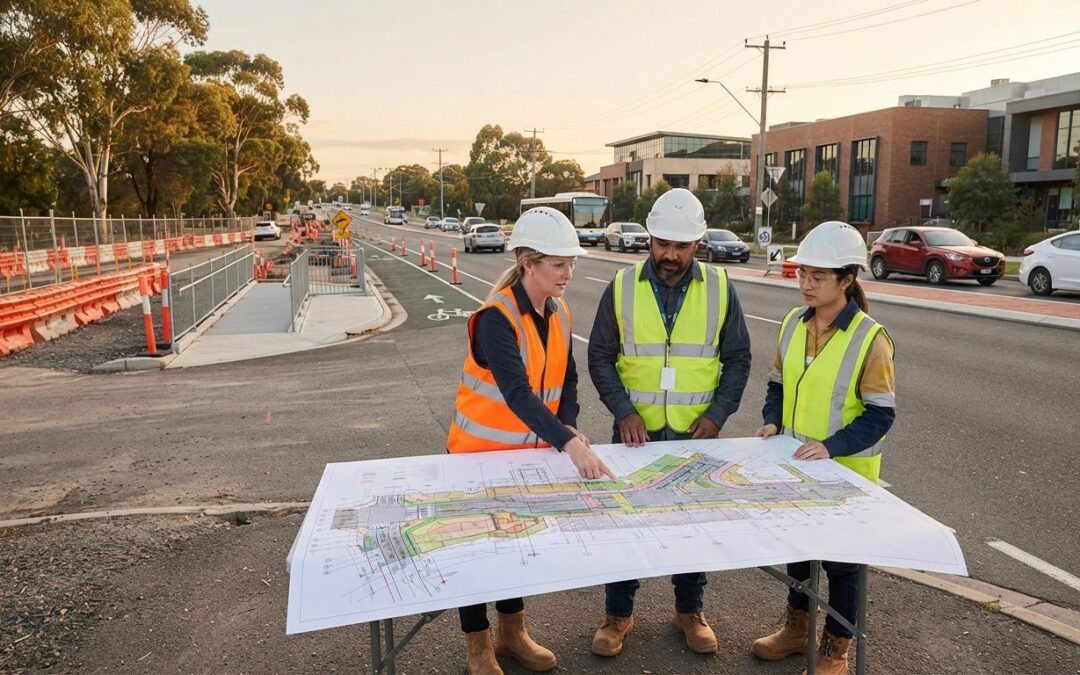
A traffic management plan for road opening can support an application, but it does not grant permission to excavate or occupy a road. That approval comes from the authority responsible for the affected area. Identifying the right authority is an important first step.
A road opening permit, a Traffic Management Plan (TMP) and a Traffic Guidance Scheme (TGS) serve different purposes. Requirements also vary between authorities and projects. Clarifying the approval pathway before scheduling work helps you identify the documents to prepare and avoid gaps in your application.
This guide explains how to identify the relevant road authority or asset owner, understand where a TMP or TGS may fit, and organise project information before applying. It also covers how to plan work staging and access for vehicles, pedestrians, cyclists and workers. ML Traffic Engineers Australia provides traffic engineering and transport planning services, including Traffic Guidance Schemes and other project-specific assessment and design work. The practical goal is to understand the likely sequence, prepare relevant details and plan how the work will affect road users.
Key Takeaways
- Identify the authority responsible for the affected road or asset before planning your application. Approval requirements depend on the location and work scope.
- A traffic management plan for road opening explains how road users may be managed around the worksite, while the permit provides authority approval to carry out the work.
- Prepare clear project, site, traffic impact and staging information to organise your application and supporting documents.
- Follow the relevant authority’s current application instructions. Processes and document requirements differ across Australia.
- Project-specific traffic planning can clarify work staging, site access and arrangements for pedestrians, cyclists, motorists and workers.
What is a road opening permit, and when might you need one?
A road opening permit is an approval from the relevant authority to excavate, occupy or carry out specified work in a road or road reserve. There is no single permit process across Australia. The responsible authority, terminology and information required can vary with the road, the work and the applicable jurisdiction.
The permit and traffic documents have separate roles. The permit process provides approval for the work under the authority’s requirements. A traffic management plan for road opening describes how traffic-related risks are planned to be managed around the worksite. A traffic plan does not, by itself, authorise excavation or use of road space.
What work could require road opening approval?
Approval may be relevant when work involves excavation, service installation or repairs, or otherwise affects a road reserve. Examples include trenching for a utility connection, repairing an underground service, or occupying part of a carriageway or footpath. These examples do not form a universal list of permit triggers.
The approval route can depend on who manages the road, who owns the affected asset and where the work will take place. A local road, a state-controlled road and an asset within a road reserve may involve different authorities or approvals. Start by identifying the road manager and any affected asset owner. Then review the relevant application instructions to establish which pathway and supporting documents apply before setting a work start date.
Road opening permit, TMP, and TGS: what is the difference?
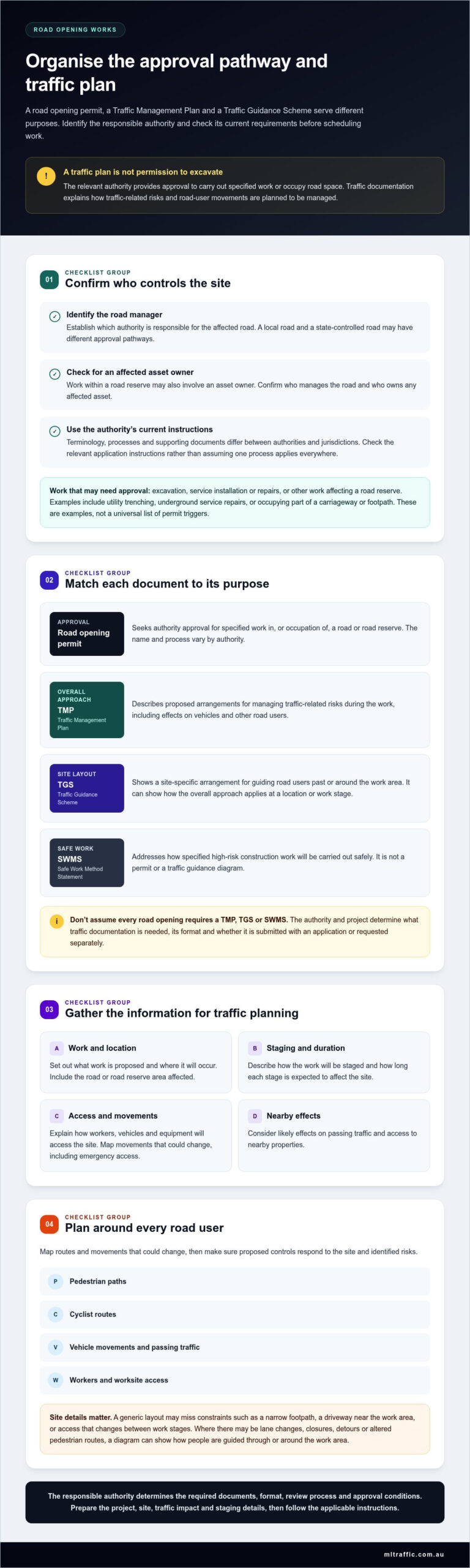
Authorities may use different names for their approval processes, so use the terminology in the relevant application instructions. The practical distinction is:
- Road opening permit: An approval mechanism for specified work in or occupation of a road or road reserve, subject to the authority’s process and conditions.
- Traffic Management Plan (TMP): A document describing arrangements for managing traffic-related risks during work, including how the work may affect vehicles and other road users.
- Traffic Guidance Scheme (TGS): A site-specific layout showing how road users are to be guided past or around the work area.
A TMP may explain the overall approach, while a TGS shows the traffic arrangement for a particular site or work stage. Both relate to the broader principles of Road traffic control: directing road users around changing conditions. Depending on the authority and project, traffic documentation may be submitted with an application or requested separately. Check the applicable instructions rather than assuming one document replaces another.
How a traffic management plan supports a road opening permit
A permit and its supporting plans answer different questions. The permit process addresses approval for the proposed work. Traffic documentation explains how the work may affect road users and how those impacts are planned to be managed. A traffic management plan for road opening can support an application, or an authority may request traffic documents separately. The responsible authority determines what it needs, the required format, its review process and any approval conditions.
These documents are not interchangeable:
| Document | Purpose |
|---|---|
| Road opening permit | Seeks authority approval for specified work in or occupation of a road or road reserve. The name and process vary by authority. |
| Traffic Management Plan (TMP) | Sets out the proposed arrangements for managing traffic-related risks during the work. |
| Traffic Guidance Scheme (TGS) | Shows a site-specific arrangement for guiding road users past or around the work area. |
| Safe Work Method Statement (SWMS) | Addresses how specified high-risk construction work will be carried out safely. It is not a permit or traffic guidance diagram. |
A TMP and TGS can work together: the TMP explains the overall approach, while a TGS shows how that approach applies at a particular location or stage. For a broader explanation of TMP scope, see Traffic Management Plan (TMP): The Definitive Guide for Australian Projects.
What information should traffic planning address?
Useful traffic planning starts with the proposed work. Set out where it will occur, how it will be staged, how long each stage is expected to affect the site, and how workers, vehicles and equipment will access it. Include the likely effects on passing traffic and nearby property access.
Map the routes and movements that could change. These may include pedestrian and cyclist paths, vehicle movements and emergency access. Proposed controls should respond to the site and identified risks. A generic layout may miss important constraints such as a narrow footpath, a driveway near the work area or a change in access between stages.
When could a TGS or other supporting document be needed?
Where work may involve lane changes, closures, detours or altered pedestrian routes, a diagram can show how road users will be guided through or around the work area. The type and level of documentation depend on the proposal and the authority’s instructions. Do not assume every road opening requires a TMP, TGS or SWMS. Use the current requirements for the application and match the documents to the work being proposed.
For project-specific traffic and pedestrian planning, traffic planning services can help organise documentation around the proposed staging, access and road-user impacts.
What to prepare before applying for a road opening permit
Prepare a clear project pack before lodging an application. The information below is commonly useful for explaining the proposal, but it is not a universal list of mandatory documents. Each authority sets its own application requirements and may request additional drawings, evidence or coordination details.
A well-prepared traffic management plan for road opening can explain how the work may affect road users. It does not grant permission to open the road. That approval must come through the relevant authority’s process.
Project and site details to gather
Start with the facts that define the work and its location. Organise the information under these headings:
- Applicant: Record the applicant’s details and the relevant project or contractor contacts.
- Work scope: Describe the activity, such as excavation, service installation or repair. Note the proposed footprint, access needs, equipment movements and indicative dates.
- Site: Identify the location clearly. Gather a site plan showing the work area and surrounding road space, using a format accepted by the authority.
- Road and assets: Identify the road manager and relevant utility or asset owners where applicable. Confirm which parts of the road reserve or assets the work may affect.
- Staging: Explain the intended sequence of work, including changes to the site setup or traffic arrangement between stages.
Keep drawings and staging details consistent with the work description. If the proposal changes, update the supporting information so it reflects the intended site arrangement.
Traffic, pedestrian, and risk information to document
Describe how the work could affect vehicle flow, pedestrian access, cyclists and access to nearby properties. Note potential hazards, proposed controls, worksite boundaries and any diversion arrangements. Consider emergency access in the site and staging plans, particularly if the work could constrain available routes.
Site-specific traffic controls respond to the actual work area, staging and road-user movements, rather than relying on a generic layout.
Use the relevant authority’s current instructions to confirm what to submit and how to present it. Depending on the proposal, the authority may request further material or coordination information. Avoid treating another project’s application pack as a fixed template. Requirements can differ according to the road, work scope and jurisdiction.
How to apply for a road opening permit: a practical sequence
Road opening approval processes differ across Australia. Use this sequence as a planning guide, then follow the current instructions from the authority responsible for the road. Traffic documents support the application where required, but they do not replace the authority’s review or approval.
- Identify the road authority. Confirm who manages the affected road and which approval process applies to the work. If a utility or other asset is involved, establish whether its owner also has a role in coordinating the proposal.
- Read the current application instructions. Check the specified application channel, document requirements, drawing formats and any project-specific coordination steps. Use the authority’s terminology rather than assuming every authority uses the same permit name.
- Assemble the application information. Prepare a clear work description, site details, proposed dates and staging information. Include the traffic documents requested for the application, such as a TMP or TGS where relevant. Make sure plans reflect the work footprint, access arrangements and effects on road users.
- Submit through the stated channel. Lodge the application and supporting material in the requested format. Keep a copy of the submission and any acknowledgement or reference details so you can track correspondence and respond consistently.
- Address review comments. If the authority requests changes or further information, update the relevant documents and resubmit as directed. Check that revisions align across the application, staging details and traffic plans so the package describes one clear proposal.
- Prepare for the work only after approval. Confirm the approval and read its conditions before scheduling road-affecting work. Brief relevant workers on the approved arrangements and keep the current approved plans available during the work. If the scope or staging changes, assess whether the authority needs to review the revised proposal before it proceeds.
A traffic management plan for road opening is most useful when developed alongside the application details, not treated as a substitute for the permit. Clear staging and access information also makes it easier to see how the proposed arrangement relates to the site.
For project-specific traffic and pedestrian planning documentation, explore traffic management services from ML Traffic Engineers. The consultancy brings more than 15 years of traffic engineering and transport planning experience to its work.
Planning road opening works with a traffic engineering consultant
Traffic planning support can be useful when proposed works affect traffic lanes, pedestrian paths, property access or vehicle movements into and out of a site. A traffic engineering consultant can translate the work method and site constraints into project-specific traffic and pedestrian arrangements. This helps clarify proposed staging and communicate the intended controls to decision-makers.
ML Traffic Engineers prepares Traffic Guidance Schemes for construction-related traffic and pedestrian management. The consultancy also prepares Traffic Impact Assessments, vehicle swept path assessments and car park designs. With more than 15 years of traffic engineering and transport planning experience, it can develop project-specific documentation that reflects the proposed work and site conditions. A well-prepared traffic management plan for road opening can support an application, but it cannot guarantee permit approval. The relevant authority makes that decision under its own process.
What traffic engineering input can contribute
Project-specific plans can set out how each stage may affect vehicles, pedestrians and cyclists, where access is maintained, and how road users are guided around the work area. For example, a staged work proposal may need to show how a pedestrian route or vehicle access arrangement changes as the work progresses. Clear plans help the project team and authority reviewers understand those details consistently.
For a broader explanation of the discipline, read The Role of a Traffic Engineer in Developments. The same focus on movement, access and site conditions applies when planning traffic arrangements for road-affecting work.
Next steps for a more organised application
Before setting work dates, bring together the project scope, site location, proposed footprint, access needs and staging. Identify the road authority and review its current application instructions. Use those instructions as the reference for application forms, supporting material and submission requirements. If the authority requests a specific document or format, align the traffic plans with that direction and the actual work proposal.
Good preparation connects the application, traffic documentation and work sequence. It also gives the project team a clearer basis for coordinating the proposed arrangements before work begins.
For help preparing project-specific traffic and pedestrian planning documentation, explore traffic management planning services.
Prepare your road opening application with confidence
A road opening permit and its supporting traffic documents have distinct roles. The relevant authority decides whether the work is approved, while a TMP or TGS explains how traffic and pedestrian impacts are planned to be managed. Requirements vary, so identify the road authority early and use its current application instructions to guide your documents and submission.
A clear traffic management plan for road opening should reflect the actual site, work staging, access needs and effects on road users. Assemble project details before choosing work dates, and make sure the proposed traffic arrangements align with the application.
ML Traffic Engineers prepares Traffic Guidance Schemes and provides traffic engineering and transport planning services, drawing on more than 15 years of experience. This project-specific planning support helps organise traffic documentation, while permit decisions remain with the relevant authority.
Explore traffic planning services to take the next step with your project. Bring together the site details and proposed work sequence to start planning the traffic arrangements that support your application.
Frequently Asked Questions
What is a road opening permit?
A road opening permit is approval from the authority responsible for a road or road reserve to carry out specified work there. It may apply to activities such as excavation, service installation or work that occupies road space. The name and process vary across Australia, and requirements depend on the road, work scope and jurisdiction. A permit is separate from traffic documents, which describe how road-user impacts are planned to be managed.
Do I need a traffic management plan for a road opening permit?
Traffic document requirements vary between road opening applications. The relevant authority may request a Traffic Management Plan (TMP), a Traffic Guidance Scheme (TGS), other supporting information or separate documents, depending on the work and its effects on road users. A traffic management plan for road opening explains proposed traffic and pedestrian arrangements, but it does not itself grant permission to carry out the work. Follow the authority’s current application instructions.
Who issues a road opening permit in Australia?
The authority responsible for managing the affected road generally determines the applicable approval process. A local road may be managed by a local council, while a state-controlled road may be managed by a state or territory road authority. The location of the work and ownership of affected assets can also shape the approvals or coordination needed. Identify the road manager first, then follow its current instructions rather than assuming one national process applies.
What documents are needed for a road opening permit application?
Required documents vary by authority and project. Commonly useful information includes applicant and project details, a description of the work, site plans, proposed dates and staging, and details of access and traffic impacts. A TMP or TGS may also be requested if the work affects traffic or pedestrian routes. The authority may ask for additional drawings or evidence. Use its current application instructions as the definitive guide to required documents and formats.
Is a Traffic Guidance Scheme the same as a road opening permit?
No. A Traffic Guidance Scheme (TGS) is a site-specific plan showing how road users may be guided past or around works. A road opening permit is an approval mechanism for specified work in or occupation of a road or road reserve. A TGS may support a permit application where required, but it does not provide permission to open the road. The authority determines whether a TGS is needed and what form it should take.
How long does it take to get a road opening permit?
There is no single processing timeframe that applies across Australia. Timing depends on the relevant authority’s process, the work’s complexity and whether the application includes the information and documents requested. Review comments or coordination with other parties may also affect progress. Check the authority’s current guidance and allow time for review before setting a work start date. Preparing or submitting a traffic plan does not confirm that the permit has been approved.

Disclaimer
The content on www.mltraffic.com.au, including all technical articles, guides, and resources, is provided for general informational and educational purposes only. It is not intended to constitute professional advice in traffic engineering, transportation planning, development approvals, or any other technical or legal field.
While ML Traffic Engineers makes every reasonable effort to ensure the accuracy, completeness, and timeliness of the information published, we do not provide any warranties or representations (express or implied) regarding its reliability, suitability, or availability for any particular purpose. Any reliance you place on the content is strictly at your own risk.
In no event shall ML Traffic Engineers, its directors, employees, authors, or affiliates be liable for any direct, indirect, incidental, special, consequential, or punitive damages (including, without limitation, loss of profits, data, or business opportunities) arising out of or in connection with the use of, or inability to use, any information provided on this website.
The articles and guides on this site are not a substitute for engaging a qualified, registered professional traffic engineer (such as an NPER or RPEQ engineer) to assess your specific project requirements. For tailored advice, compliance assessments, or traffic engineering services, please contact a competent professional.
This disclaimer may be updated from time to time without notice. By accessing or using this website, you agree to be bound by the most current version of this disclaimer.
