
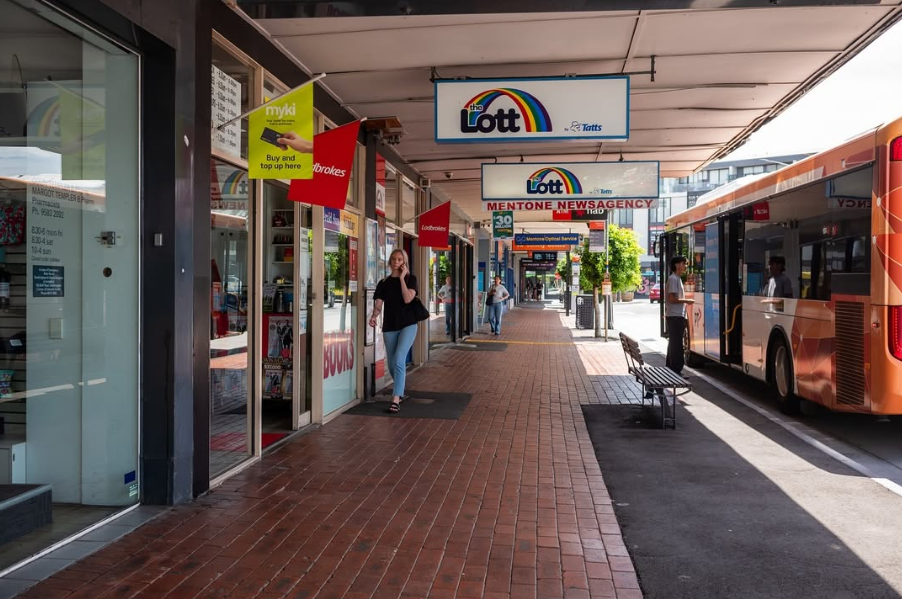
We are traffic engineers servicing Kingston Council includes Aspendale, Aspendale Gardens, Bonbeach, Braeside, Carrum, Chelsea, Chelsea Heights, Cheltenham, Clarinda, Clayton South, Dingley Village, Edithvale, Heatherton, Highett, Mentone, Moorabbin, Moorabbin Airport, Mordialloc, Oakleigh South, Parkdale, Patterson Lakes, Waterways.
Navigating the town planning application process within the City of Kingston presents unique challenges for developers. A frequent cause for delay or rejection is an inadequate traffic report, turning a procedural step into a significant project risk. Successfully undertaking Traffic and Car Parking Impact Assessments in Kingston Council of Melbourne is therefore a critical determinant for project approval, demanding a thorough understanding of specific local planning requirements that are often complex and difficult to interpret.
This comprehensive guide provides the necessary clarity. We will detail the specific triggers that mandate a traffic and parking report in Kingston, outline the essential components your assessment must include for full compliance, and provide a direct framework for a submission that withstands council scrutiny. Our objective is to equip you with the expert knowledge required to proceed with confidence, eliminate uncertainty, and ensure your town planning application is processed for a smooth and timely approval.
Key Takeaways
-
A compliant Traffic and Parking Assessment is a mandatory requirement under the Kingston Planning Scheme, essential for demonstrating your development will not adversely affect local amenity.
-
This guide outlines the core components required for a compliant report when undertaking Traffic and Car Parking Impact Assessments in Kingston Council of Melbourne, maximising your chances of a first-time approval.
-
Understand the specific requirements of the Kingston Parking Management Policy to ensure your car parking design meets council standards and avoids costly project delays.
-
Discover why engaging a traffic consultant with direct experience in Kingston is critical for navigating local policies and achieving a successful outcome for your application.
Table of Contents
-
Why Your Development in Kingston Needs a Traffic and Parking Assessment
-
Core Components of a Compliant Traffic Impact Assessment (TIA) for Kingston
-
Mastering the Car Parking Assessment: Kingston Council’s Specific Rules
Why Your Development in Kingston Needs a Traffic and Parking Assessment
A professional traffic and car parking assessment is a critical component of most development applications submitted to the Kingston City Council. Its core purpose is to demonstrate that a proposed development will not adversely affect the safety, efficiency, or amenity of the local transport network. For developers, successfully undertaking Traffic and Car Parking Impact Assessments in Kingston Council of Melbourne is not merely a procedural step; it is a fundamental requirement to ensure a smooth and timely planning permit approval process. The assessment provides council planners with the technical data needed to verify that your project aligns with the strategic objectives outlined in the Kingston Planning Scheme.
To better understand the car parking assessment component, the following video provides a detailed step-by-step guide:
Key Triggers for a Traffic Report in Kingston
A traffic impact assessment is generally required by Kingston Council when a development is likely to impact the surrounding road network or on-street parking conditions. Key triggers include:
-
Development Type: Multi-dwelling residential projects, commercial and retail centres, industrial facilities, and childcare centres almost always require a report.
-
Traffic Generation: Any development that generates a significant volume of new vehicle trips, as determined by council’s thresholds.
-
Parking Reductions: Applications proposing fewer car parking spaces than the statutory requirement stipulated in the planning scheme.
-
Access Changes: Proposals involving new or modified vehicle access points, particularly onto main roads or streets with high traffic volumes.
The Role of the Kingston Planning Scheme and Local Policies
The requirement for an assessment is governed by the Kingston Planning Scheme. Specifically, Clause 52.06 (Car Parking) sets the standard car parking rates for various land uses across Victoria. However, Kingston Council supplements this with its own local policies, such as the Parking Management Policy, which reflects the municipality’s focus on sustainable transport. These local policies are informed by established transport planning principles and can introduce specific requirements that override or add detail to the state-wide provisions, making local expertise essential.
Consequences of an Inadequate Assessment
Submitting a development application without a required report, or with one that is substandard, will lead to significant project complications. Common outcomes include:
-
Request for Further Information (RFI): Council will halt the assessment of your application, causing immediate and costly delays.
-
Outright Refusal: If the traffic and parking impacts are deemed unacceptable and cannot be resolved, the council may refuse the planning permit application entirely.
-
Costly Redesigns: An inadequate report may force expensive architectural redesigns to address vehicle access, ramp grades, or parking layout issues late in the process.
Core Components of a Compliant Traffic Impact Assessment (TIA) for Kingston
A Traffic Impact Assessment (TIA) submitted to Kingston Council is a critical technical document that demonstrates professional due diligence. A compliant report is built on robust, data-driven analysis and clear justifications for all conclusions. The process of undertaking Traffic and Car Parking Impact Assessments in Kingston Council of Melbourne requires this structured approach, as it provides council planners with the necessary evidence to make an informed decision on a development application.
Traffic Generation and Distribution
This foundational analysis quantifies the traffic your development will create. We utilise established traffic generation rates, typically from the VicRoads or RMS guides, to accurately forecast vehicle movements. This data is then assigned to the local road network-a process known as trip distribution-to model how vehicles will arrive and depart. The assessment critically focuses on the AM and PM peak hour impacts, as this is when the surrounding road network is under the most pressure.
Site Access, Circulation, and Safety
This component scrutinises the physical design of the development’s interface with the road network. Key considerations include:
-
Driveway Design: Assessing the location, width, and grade of driveways to ensure safe and efficient operation.
-
Sight Lines: Verifying that drivers exiting the site have adequate visibility of pedestrians and oncoming traffic, compliant with Australian Standards.
-
Internal Manoeuvring: Ensuring all vehicles, from cars to service trucks, can navigate the site safely. This is confirmed using detailed swept path analysis to model vehicle turning movements, a critical step for compliance with AS 2890.1.
Impact on Local Road Network
A compliant TIA extends beyond the site boundary to evaluate the development’s effect on surrounding infrastructure. This involves detailed intersection analysis to assess current performance and predict future capacity with the added development traffic. The methodology for this is clearly outlined in VicRoads’ official TIA guidelines. The assessment identifies if any road network upgrades are required to mitigate impacts and includes a thorough review of pedestrian and cyclist access and safety, ensuring the development integrates seamlessly and safely into the existing transport environment.
Mastering the Car Parking Assessment: Kingston Council’s Specific Rules
A car parking assessment is a critical component of any development application within the City of Kingston. Council places significant emphasis on ensuring new developments provide adequate, safe, and accessible parking to mitigate on-street congestion and amenity impacts. Successfully undertaking Traffic and Car Parking Impact Assessments in Kingston Council of Melbourne requires a detailed understanding of both the statewide provisions in Clause 52.06 of the Kingston Planning Scheme and Council’s own specific parking policies. This section outlines the core technical requirements for compliance.
Calculating Car Parking Demand
The starting point for any assessment is calculating the statutory parking demand. This is determined by applying the rates specified in Clause 52.06 of the Kingston Planning Scheme to the proposed development’s floor area. For common land uses, these rates include:
-
Residential Dwelling: 1 space for a 1-2 bedroom dwelling; 2 spaces for a 3+ bedroom dwelling, plus visitor parking.
-
Retail Premises: 4 spaces per 100 square metres of leasable floor area.
-
Office: 3.5 spaces per 100 square metres of net floor area.
In addition, all assessments must account for accessible parking spaces as per the Disability Discrimination Act (DDA) and provide bicycle parking facilities as stipulated by the Planning Scheme.
Justifying a Car Parking Reduction
Kingston Council may consider a reduction to the statutory parking requirement if a robust justification is provided within the Traffic Impact Assessment (TIA). The report must demonstrate conclusively that the proposed parking supply is sufficient for the development’s operational needs. Council assesses reduction requests against key criteria, including:
-
Proximity and accessibility to high-frequency public transport like train stations and bus routes.
-
The site’s walkability and convenient access to local shops and services.
-
Opportunities for shared parking arrangements with neighbouring or complementary land uses.
-
Demonstrable availability of on-street public parking in the vicinity.
A comprehensive analysis is required to prove that a reduction will not result in a negative amenity impact on the surrounding street network.
Car Park Design and Layout Compliance
Beyond the number of spaces, the physical design and geometry of the car park are non-negotiable. All car parking areas, accessways, and ramps must be designed in strict compliance with Australian Standard AS 2890.1: Parking facilities – Off-street car parking. This standard dictates critical elements, including minimum car space dimensions, aisle widths for circulation, ramp grades, and headroom clearances. Correct implementation of clear signage and durable line marking is also mandatory to ensure safe and efficient operation.
The Assessment Process: A Step-by-Step Guide for Developers
Navigating the requirements for a development application can be complex. At ML Traffic Engineers Pty Ltd, we provide a structured, transparent process to demystify the journey. Our systematic approach ensures all council requirements are met efficiently when undertaking Traffic and Car Parking Impact Assessments in Kingston Council of Melbourne, minimising delays and uncertainty for your project.
Step 1: Initial Scoping and Fee Proposal
The process begins with an initial consultation to define the specific requirements of Kingston Council for your development type. Based on this, we provide a comprehensive, fixed-fee proposal detailing the full scope of work, methodology, and deliverables. This ensures complete transparency from the outset. To begin your assessment, contact us to establish a clear project scope.
Step 2: Data Collection and Site Analysis
This critical phase involves a combination of robust on-site work and detailed desktop analysis. Our process includes:
-
On-site Inspections: Conducting detailed site visits, traffic counts, and parking occupancy surveys to gather accurate, real-world data.
-
Desktop Analysis: A thorough review of Kingston Council planning policies, existing traffic data, and relevant Australian Standards (e.g., AS 2890.1).
-
Consultant Coordination: Liaising directly with your project team, including architects and town planners, to ensure our assessment is fully integrated with the proposed design.
Step 3: Report Preparation and Submission
With all data collected, our senior engineers draft the comprehensive Traffic and Car Parking Impact Assessment report. This document includes detailed analysis, technical drawings such as swept path diagrams, and clear recommendations that address council criteria. A concise executive summary is prepared, allowing council officers to quickly grasp key findings. The final report is delivered ready for submission as a critical component of your town planning application package.
Step 4: Responding to Council Feedback
It is not uncommon for Council to issue a Request for Further Information (RFI). Our extensive experience means we can anticipate likely queries and respond to any RFI promptly and effectively. Our role is to manage this dialogue with Council on your behalf, providing the necessary clarifications and technical justifications to achieve a swift and positive planning outcome for your development.
Why Your Choice of Traffic Consultant Matters in Kingston
The success of a development application does not rest solely on the merits of the design; it heavily depends on the quality and strategic insight of the supporting documentation. Successfully undertaking Traffic and Car Parking Impact Assessments in Kingston Council of Melbourne requires a consultant who is not just technically proficient, but also a seasoned navigator of local council intricacies. The right expert can mean the difference between a swift approval and a protracted, costly process bogged down by Requests for Further Information (RFIs).
The Value of Local Council Experience
A traffic engineering consultant with a deep-seated familiarity with the City of Kingston offers a significant advantage. They understand the specific nuances of the Kingston Planning Scheme, local traffic management policies, and the expectations of council’s traffic engineers and town planners. This local knowledge streamlines the assessment process, ensuring the report proactively addresses council’s key concerns. Our firm’s extensive experience with Melbourne councils, detailed on our about page, demonstrates a proven track record of facilitating smoother, more efficient application outcomes.
Key Questions to Ask a Potential Consultant
Before engaging a traffic engineer, it is critical to perform due diligence. We recommend asking direct questions to verify their suitability for your project:
-
Have you prepared traffic and parking reports for similar types of developments within the City of Kingston before?
-
Who will be personally preparing the report and managing the project – a senior, principal engineer or a junior staff member?
-
Can you provide anonymised examples of past successful applications or reports submitted to Kingston Council?
What to Look For in a Fee Proposal
A professional and transparent fee proposal is a clear indicator of a consultant’s methodology. Your proposal should contain more than just a final figure; look for these essential elements:
-
A detailed and clearly defined scope of works, ensuring there are no hidden costs for variations or council meetings.
-
Specific inclusions for all necessary tasks, such as site inspections and direct liaison with council officers.
-
The direct contact details for the senior engineer responsible for your project, guaranteeing accountability.
For more detailed insights into navigating the development application process, you can explore our past articles. At ML Traffic Engineers, we ensure the senior consultant who provides your quote is the expert who completes the work, delivering the highest standard of professional service for your Kingston development.
Secure Your Development’s Approval in Kingston
Navigating Kingston Council’s planning process requires a meticulous and expert approach. As outlined, a compliant report is not optional-it is a critical component for project approval. Successfully undertaking Traffic and Car Parking Impact Assessments in Kingston Council of Melbourne demands a deep understanding of local regulations and precise traffic engineering principles, ensuring your application is robust and defensible from the outset.
This is where the right expertise becomes your most valuable asset. ML Traffic Engineers offers extensive experience with the Kingston Planning Scheme, supported by a proven track record across thousands of developments in Melbourne. We guarantee direct, senior engineer involvement on every project, providing the assurance and authority your application needs for a smooth approval process.
Don’t let compliance issues create unnecessary delays. Ensure your Kingston development is compliant. Contact ML Traffic Engineers for a quote. Let our expertise clear the path for your project’s success.
Frequently Asked Questions: Kingston Traffic & Parking Assessments
What is the typical cost for a traffic and parking impact assessment in Kingston?
For a standard residential or small-scale commercial development, a traffic and parking impact assessment in the Kingston Council area typically costs between A$2,000 and A$4,000 + GST. The final fee is determined by the project’s scale and complexity. Factors such as the need for on-site traffic surveys or detailed intersection analysis can influence the cost, as these require a more extensive scope of work to meet Council’s specific reporting requirements.
How long does it take to prepare a traffic report for a DA submission?
A comprehensive traffic report for a standard Development Application (DA) in Kingston can generally be completed within 7 to 10 working days. This timeline begins upon our receipt of all required architectural drawings and project information. More complex projects may require additional time for data collection or detailed modelling. We focus on an efficient turnaround to ensure your DA submission proceeds without unnecessary delays from our end.
Does Kingston Council have its own specific car parking rates, or do they use the state standard?
Kingston Council primarily refers to the statutory car parking rates outlined in Clause 52.06 of the Victoria Planning Provisions. However, Council also maintains local planning policies and structure plans that can impose different or more specific requirements, particularly within activity centres or special-use zones. A thorough assessment must cross-reference both the state and local provisions to ensure the proposed parking supply is fully compliant and justified for the specific site.
What are the most common mistakes developers make in their traffic reports for Kingston?
A frequent error when undertaking Traffic and Car Parking Impact Assessments in Kingston Council of Melbourne is the misinterpretation of car parking rates or a failure to address local planning policy overlays. Other common mistakes include providing inadequate swept path diagrams for accessways and car parks, or failing to robustly justify a requested parking shortfall with sufficient evidence. These oversights typically result in Council issuing a Request for Further Information (RFI), causing significant project delays.
Is a swept path analysis always required with a traffic report in Kingston?
While not required for every application, a swept path analysis is a standard requirement for most developments that involve new or altered vehicle access, car parks, or loading facilities. Kingston Council will almost certainly require swept path diagrams to verify that vehicle access and manoeuvring can be achieved safely and efficiently, in accordance with Australian Standard AS 2890.1. It is best practice to provide this analysis proactively to demonstrate compliance.
Can a well-prepared traffic report help justify a development that doesn’t fully meet parking requirements?
Yes, definitively. A primary function of a professional traffic report is to present a robust, evidence-based justification for a car parking shortfall. Through detailed analysis of site-specific conditions, such as local on-street parking availability, proximity to public transport, and the unique operational nature of the proposed land use, a report can demonstrate to Council that the standard rate is not applicable. This is a critical component of many successful development applications.
