
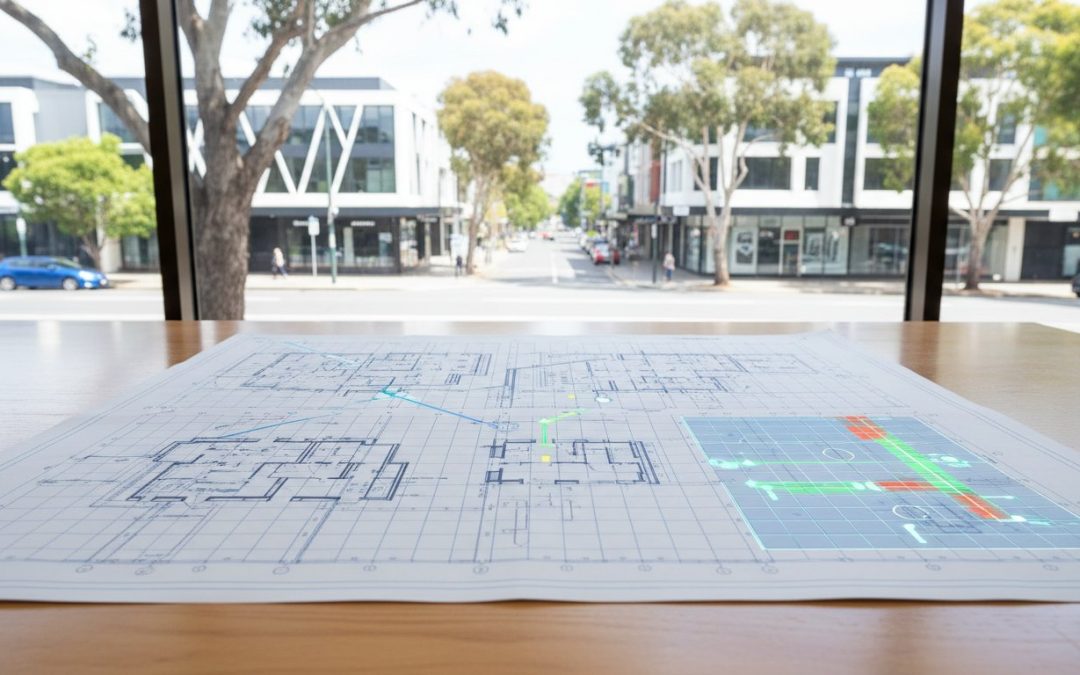
We are traffic engineers servicing Aintree, Bonnie Brook, Brookfield, Burnside, Burnside Heights, Caroline Springs, Cobblebank, Deanside, Diggers Rest, Exford, Eynesbury, Fieldstone, Fraser Rise, Grangefields, Harkness, Hillside, Kurunjang, Melton, Melton South, Melton West, Mount Cottrell, Parwan, Plumpton, Ravenhall, Rockbank, Strathtulloh, Taylors Hill, Thornhill Park, Toolern Vale, Truganina, Weir Views.
A deficient traffic and parking report is a common cause for development application delays and rejections within Melton City Council. For developers, the process can seem unnecessarily complex and bureaucratic, creating significant risk for projects when local requirements are not fully understood. A non-compliant assessment can lead to costly setbacks and requests for further information, disrupting project timelines and budgets.
Successfully undertaking Traffic and Car Parking Impact Assessments in Melton Council is therefore critical to achieving a timely and positive planning outcome. It demands a detailed understanding of the planning scheme, precise traffic data analysis, and strict adherence to Australian Standards. This expert guide provides the clarity required to navigate this process with confidence.
Here, we outline exactly when a traffic report is triggered, provide a checklist of the essential components for a compliant assessment, and equip you with the professional knowledge to ensure your development application proceeds without traffic-related issues. This is your definitive resource for a smoother, more efficient approval process in Melton.
Key Takeaways
-
Understand why Melton Council mandates a traffic assessment to protect local road safety and network efficiency for your development application.
-
Learn the essential components of a compliant report, including mandatory adherence to Australian Standards (AS 2890 series), to satisfy Council’s technical criteria.
-
Master the step-by-step process for undertaking Traffic and Car Parking Impact Assessments in Melton Council, from initial brief to final submission.
-
Identify the frequent errors that can jeopardise a Development Application and learn how to ensure your assessment avoids these common pitfalls.
Table of Contents
Why Your Melton Development Needs a Traffic and Parking Impact Assessment
A Traffic and Parking Impact Assessment is a fundamental requirement for most development proposals within the City of Melton. Its primary purpose is to demonstrate to Melton Council that your proposed development will not adversely affect the safety, efficiency, or amenity of the local road network. Council has a statutory obligation to manage its infrastructure, and this report provides the technical evidence they need to approve a development with confidence. A comprehensive assessment is a critical, non-negotiable component of a successful Development Application (DA).
To better understand the core function of these reports, the following video provides a clear overview:
It is crucial to differentiate between a Traffic Impact Assessment (TIA), which is required for the planning and DA approval stage, and a Traffic Management Plan (TMP), which is an operational document required for the construction phase. The TIA analyses the long-term impact of the completed development, while the TMP manages temporary traffic changes during building works.
Triggers for a Mandatory Traffic Assessment
The requirement for a traffic report is typically triggered by a development that intensifies land use or changes traffic patterns. While specific thresholds vary, early consultation with Council or a qualified traffic consultant is essential. Common triggers include:
-
A significant change of land use (e.g., from residential to commercial).
-
A substantial increase in staff, customers, or residents.
-
Developments known to generate high traffic volumes, such as childcare centres, medical facilities, warehouses, places of worship, and multi-unit residential buildings.
-
Proposals that meet or exceed certain thresholds for new parking spaces or daily vehicle trips as defined by Council’s planning scheme.
The Cost of Getting it Wrong: DA Delays and Rejections
Submitting an incomplete or inaccurate traffic report is a direct route to project complications. Council planners will issue a Request for Information (RFI), immediately halting the assessment of your DA. This process introduces significant project delays, often measured in months, and incurs additional costs in consultant fees and holding costs. For applications with serious non-compliance issues related to traffic, access, or parking, the result can be an outright refusal. Properly undertaking Traffic and Car Parking Impact Assessments in Melton Council from the outset is not an expense; it is an investment in project certainty and timely approval.
Key Components of a Compliant Assessment for Melton Council
A successful development application depends on a robust and technically sound report. When undertaking traffic and car parking impact assessments in Melton Council, the submission must be a data-driven, evidence-based document that addresses all relevant standards and local policies. A compliant report demonstrates a thorough understanding of the development’s impact and proposes effective, safe solutions. Key components must align with Australian Standards and specific overlays or structure plans applicable to the site within the Melton Planning Scheme.
Car Parking Demand Assessment
This section quantifies the required parking supply. The assessment must justify the proposed number of car spaces by referencing statutory rates outlined in the Melton Planning Scheme. The report must also detail provisions for:
-
Accessible parking spaces compliant with AS 2890.6.
-
Bicycle parking and any required end-of-trip facilities (showers, lockers).
If a parking shortfall is proposed, a detailed justification is mandatory. This must be supported by evidence, such as site-specific demand surveys, proximity to public transport, or shared parking arrangements.
Traffic Generation and Road Network Impact
This analysis evaluates how the development will affect the surrounding road network. The process involves calculating the anticipated number of vehicle trips during weekday AM and PM peak hours, using established rates from Victorian traffic generation guides. Existing traffic conditions are established through on-site surveys. The report then assesses the development’s impact on the performance of nearby intersections, using methodologies outlined in technical manuals such as the Austroads’ Guide to Traffic Management. Any necessary road network upgrades or developer contributions must be clearly identified.
Site Access and Internal Layout Review
A critical component is ensuring the proposed on-site design is safe, efficient, and compliant. This technical review focuses on the physical layout of access driveways and car parking areas. Key elements assessed include:
-
Vehicle Swept Path Analysis: To confirm that design vehicles can safely enter and exit the site without encroaching on opposing lanes or kerbs.
-
Internal Layout Compliance: Ensuring all car parking spaces, aisle widths, and circulation roadways meet the stringent requirements of AS 2890.1: Off-street car parking.
-
Pedestrian Safety: Verifying adequate sight lines for drivers and pedestrians at all conflict points, including driveways and internal ramps.
The Assessment Process: A Step-by-Step Walkthrough
For developers and architects new to the process, undertaking Traffic and Car Parking Impact Assessments in Melton Council can seem complex. At ML Traffic Engineers, we provide a structured, transparent process designed for efficiency and clarity. A successful outcome relies on close collaboration between the developer, architect, and our traffic engineering consultants. The typical project timeline involves three distinct phases, from initial data gathering through to final council determination.
Phase 1: Scoping and Data Collection
The foundational phase ensures the assessment is accurately tailored to your development proposal and Melton Council’s specific requirements. This stage involves a methodical approach to gathering all necessary baseline information. Key activities include:
-
An initial consultation to define the project scope and understand the development’s operational characteristics.
-
Conducting on-site surveys to collect current traffic counts and parking occupancy data.
-
A thorough review of architectural plans against the Melton Planning Scheme and relevant Australian Standards (AS 2890 series).
-
Proactive liaison with Melton Council’s traffic engineering department if any preliminary issues are identified.
Phase 2: Analysis and Report Preparation
With all data collected, our senior engineers perform the detailed technical analysis. This is where the potential traffic and parking impacts of the development are quantified and assessed. The core components of this phase are:
-
Calculating traffic generation and car parking demand based on empirical data and Council’s statutory requirements (Clause 52.06).
-
Performing vehicle swept path analysis using industry-standard software like AutoTURN to verify site access and circulation for all design vehicles.
-
Drafting the comprehensive report, which includes all methodologies, findings, and clear recommendations to support the application.
Explore our full range of traffic engineering services that support this phase.
Phase 3: Submission and Council Liaison
Our involvement does not end with the delivery of a report. We provide end-to-end support throughout the council assessment period to ensure a smooth process. This commitment includes:
-
Finalising the Traffic and Parking Impact Assessment for inclusion in the formal Development Application (DA) package.
-
Acting as the primary point of contact for any traffic-related questions from Council’s assessment officers.
-
Preparing clear and concise responses to any formal Requests for Further Information (RFIs) issued by Council.
-
Providing ongoing professional support until a final determination is made on your application.
This structured methodology ensures all aspects of your traffic and parking assessment are addressed with professional diligence. Contact ML Traffic Engineers to discuss your project requirements.
Avoiding Common Pitfalls in Your Melton Traffic Assessment
Successfully undertaking Traffic and Car Parking Impact Assessments in Melton Council demands a meticulous, proactive approach. A minor oversight can lead to significant delays, requests for further information (RFIs), or even the refusal of your Development Application. Based on our extensive experience, we have identified the most frequent errors that jeopardise projects in the City of Melton. Addressing them early is critical for a smooth approval process.
Pitfall 1: Inadequate Parking Provision or Justification
Melton Council has specific car parking rates within its Planning Scheme that must be correctly applied. A common failure is the miscalculation of these rates or providing a weak, unsubstantiated argument for a parking shortfall, often resulting in an immediate RFI. Key mistakes include:
-
Failing to correctly interpret and apply Clause 52.06 parking rates for the proposed land use.
-
Overlooking mandatory provisions for visitor parking, loading bays, or accessible spaces.
-
Submitting generic justifications for a parking reduction without localised data or first-principles analysis.
Our extensive experience across thousands of projects, detailed on our about page, ensures these fundamental requirements are met correctly from the outset.
Pitfall 2: Non-Compliant Access and Car Park Design
A compliant traffic report is undermined by a non-compliant architectural design. The physical layout of the car park and accessways must strictly adhere to Australian Standards (AS 2890.1). Council planners will scrutinise swept path diagrams and dimensions. Critical design flaws include:
-
Driveways and ramps that are too steep or narrow, failing swept path analysis for the B85 or other designated design vehicle.
-
Car park layouts with insufficient aisle widths or undersized parking spaces.
-
Poor internal circulation that neglects the safety of pedestrians and cyclists.
-
Driveway crossover designs that negatively impact public footpaths or require the removal of protected street trees.
Pitfall 3: Underestimating Local Traffic Impact
A traffic assessment cannot be a desktop exercise using generic data; it must reflect the real-world conditions of the Melton road network. Council will reject reports that do not demonstrate a genuine understanding of the local context. Common oversights include:
-
Using outdated traffic counts that do not account for recent growth.
-
Ignoring the cumulative traffic impact from other nearby approved or under-construction developments.
-
Failing to acknowledge and address known local congestion points or residential ‘rat runs’.
-
Proposing new vehicle access points too close to busy intersections, roundabouts, or schools.
These pitfalls highlight why early engagement with a specialist traffic engineering consultant is a necessity. A seasoned expert with deep local knowledge can identify and resolve these issues during the initial design phase, preventing costly redesigns and delays. For professional guidance on your next Melton project, contact the experts at mltraffic.com.au.
Secure Your Melton DA with a Compliant Traffic Assessment
Successfully undertaking Traffic and Car Parking Impact Assessments in Melton Council is a critical, non-negotiable step for any development application. As outlined, a compliant report requires a detailed understanding of local requirements and a proactive strategy to avoid common pitfalls that can cause significant delays. A meticulously prepared assessment not only satisfies regulatory obligations but also streamlines your path to project approval.
At ML Traffic Engineers, we provide the specialist expertise required to navigate these complexities. With over 15 years of direct experience with Victorian councils, we have a proven track record in securing DA approvals. Our clients benefit from direct access to the principal engineers who conduct the assessment, ensuring accountability and technical precision from quote to completion.
Ensure your project moves forward without unnecessary complications. Request a Quote for Your Melton Development Project today and let our experienced team deliver the robust, compliant report you need for success.
Frequently Asked Questions
When is a Traffic Impact Assessment officially required by Melton Council?
A Traffic Impact Assessment is typically required when a development proposal is likely to generate a significant increase in traffic movements. Triggers under the Melton Planning Scheme often include multi-dwelling residential projects, commercial or industrial sites exceeding a certain floor area, or specific land uses such as childcare centres, medical centres, or service stations. A professional assessment of your proposal against council requirements is the definitive way to confirm this necessity.
What’s the difference between a Traffic Impact Assessment (TIA) and a Traffic Management Plan (TMP)?
A Traffic Impact Assessment (TIA) is a strategic report submitted with a Development Application (DA). It analyses the long-term impact of a completed development on the surrounding road network and parking infrastructure. In contrast, a Traffic Management Plan (TMP) is an operational document, often required post-approval as a permit condition. It details the temporary measures needed to safely manage traffic, pedestrians, and workers during the construction phase of a project.
How long does it take to prepare a traffic and parking report for a DA in Melton?
For a standard development, a comprehensive traffic and parking report can typically be prepared within 1 to 2 weeks from engagement. This timeframe allows for the necessary site investigations, data analysis, and report compilation. The schedule for more complex projects may extend if detailed traffic surveys are required. Efficiently undertaking Traffic and Car Parking Impact Assessments in Melton Council is a core focus, ensuring your project timelines are met.
How much does a Traffic Impact Assessment typically cost for a development in Melton?
The cost for a professional Traffic Impact Assessment for a small to medium-scale development in the City of Melton typically ranges from A$2,500 to A$5,000 plus GST. The final fee is determined by the project’s complexity, the specific requirements outlined by Melton Council, and whether new traffic count surveys are necessary. We provide a fixed, upfront fee proposal to ensure complete cost transparency for our clients.
What happens if Melton Council requests more information after we submit the report?
Receiving a Request for Further Information (RFI) from Council is a standard part of the development application process. Should this occur, our senior traffic engineers will thoroughly review the Council’s queries, prepare a formal written response addressing each point, and amend the report as required. This follow-up service is a crucial part of our engagement, ensuring all council concerns are professionally and adequately resolved to facilitate approval.
Can ML Traffic Engineers help with developments outside of the City of Melton?
Yes. While we have extensive experience within the City of Melton, our qualifications and expertise are applicable across all Victorian municipalities and interstate. Our professional engineers have successfully completed assessments for thousands of developments in numerous local government areas throughout Australia. We are proficient in interpreting and applying the specific planning schemes, policies, and engineering standards of any council to ensure full compliance for your project.
